


Best Airport Transfer Options in Sydney
- Best Sydney Airport transfer options at a glance
- Private airport transfer: best for pre-arranged door-to-door travel
- Taxi: best for a walk-up ride without advance booking
- Rideshare: best for app-based booking after arrival
- Airport train: best for city stays near a station
- Shared airport shuttle: best when the stops and timetable suit your trip
- Which option is best for your type of trip?
- Compare total cost, not just the advertised fare
- Check the pickup details before you book

Best Sydney Airport transfer options at a glance
The best airport transfers in Sydney balance the total price with the effort involved in reaching your destination. A low fare may be less appealing if it involves several changes with heavy bags, while a private vehicle may offer little extra value for someone travelling light to a hotel beside a station.
This comparison covers Sydney Kingsford Smith Airport (SYD), including T1 International and T2/T3 Domestic.
| Option | Best suited to | Cost to compare | Main advantage | Main trade-off |
|---|---|---|---|---|
| Private airport transfer | Families, groups and travellers who need a vehicle arranged in advance | Total quote for the required vehicle and inclusions | Pre-arranged collection and direct travel | Waiting allowances and booking conditions vary |
| Taxi | Travellers who prefer a walk-up service | Applicable fixed fare or metered fare, including additional charges | Available through terminal taxi ranks | A suitable vehicle may involve a wait |
| Rideshare | Travellers comfortable arranging transport through an app | Live quote for the correct vehicle category | Convenient booking and payment through the app | Collection points and waiting times vary |
| Airport train | Solo travellers and couples staying near a station | Each passenger’s fare, including the airport station access fee | Avoids road congestion | Requires walking or onward transport to some destinations |
| Shared shuttle | Travellers whose accommodation is close to a served stop | Total passenger fares and luggage charges, if applicable | Shared road transport to selected destinations | Departure times and stops may make the journey longer |
| Public bus | Budget-conscious travellers with manageable luggage | Fares for the complete journey and connections | Useful for local destinations and connecting journeys | May require changes before reaching accommodation |
Private airport transfer: best for pre-arranged door-to-door travel
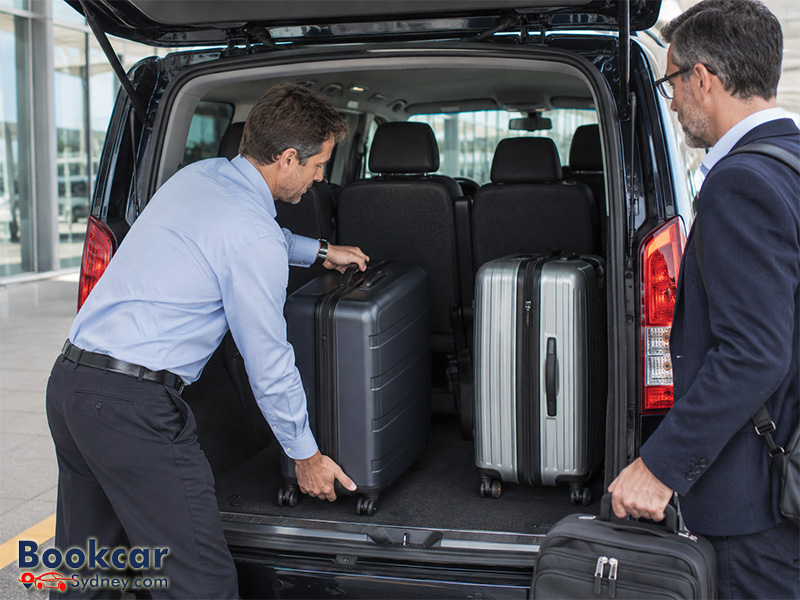
A private transfer is worth considering when you want to arrange the vehicle, destination and collection details before flying. It is particularly useful when your group needs more luggage space, child seats or a specific type of vehicle.
The main benefit is having those arrangements settled in advance. However, a reservation does not remove the possibility of traffic delays or operational problems. What matters is the service confirmed in your booking and how the operator handles changes.
Before paying, establish whether the quote includes:
- Airport access charges, tolls and parking.
- The vehicle size needed for all passengers and bags.
- Any requested child seats.
- Waiting time after arrival.
- Additional stops.
- Charges arising from flight delays or changes to the booking.
Flight monitoring, a terminal meet-and-greet and luggage assistance should be confirmed individually. They are not automatically included in every service described as an airport transfer.
Check when the waiting allowance begins. A period measured from the aircraft’s landing time can work differently from one measured from an agreed collection time, particularly after an international arrival.
A private transfer offers the most value when these arrangements solve a practical problem for your trip. For a solo passenger with one small bag and a hotel beside a station, the additional service may be less important.

Taxi: best for a walk-up ride without advance booking
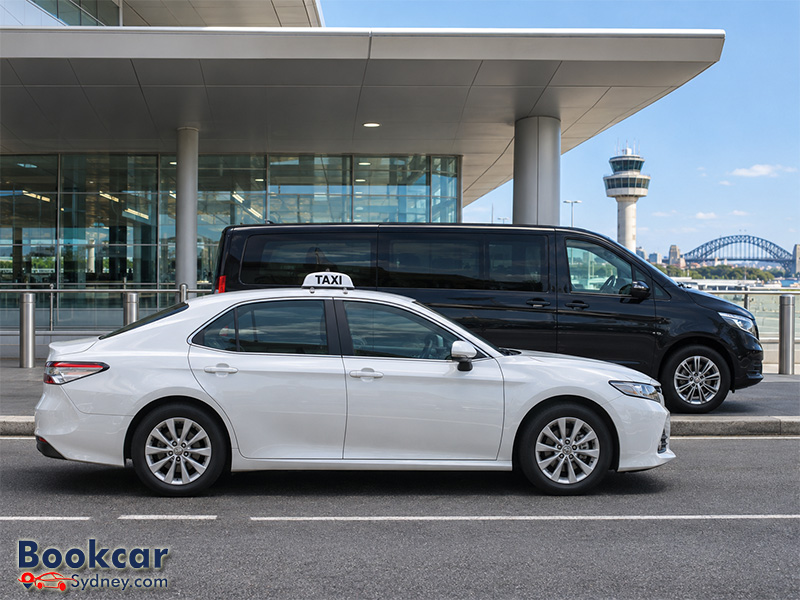
A taxi is a straightforward option if you prefer to collect your bags and arrange a direct ride at the airport. Taxi ranks serve each terminal, and rank staff can assist with requests for larger or wheelchair-accessible vehicles. A particular vehicle type may involve a wait.
Taxi pricing depends on the journey. As of November 2026, the published Sydney Airport–CBD fixed-fare trial covers eligible uninterrupted trips from airport taxi ranks to a designated CBD area:
| Eligible taxi journey | Published fixed fare |
|---|---|
| Standard taxi, including wheelchair-accessible services | AU$60 |
| Maxi taxi requested by the passenger or carrying five or more passengers | AU$80 |
The maxi-taxi pricing has an exception when carrying a person who uses a wheelchair. The fixed fares include taxes, fees, levies and road tolls; payment surcharges or cleaning fees may still apply.
Check that your exact destination falls within the designated area. These fares do not apply to every Sydney address, private transfers or rideshare bookings. They also do not establish a general fixed fare for the return journey to the airport.
For airport trips outside the applicable area, compare the metered fare and permitted additional charges. Do not assume that a private transfer will always be cheaper than a taxi, or that a taxi will always cost less than a pre-booked vehicle.
Rideshare: best for app-based booking after arrival
Rideshare can suit travellers who are comfortable checking a live quote and following collection instructions on their phone. Compare the price for the vehicle category that can carry your whole party and luggage.
A lower quote for a smaller vehicle is not a useful comparison if you need a larger car once your bags are included.
Pickup arrangements differ by terminal and service. At T1, UberX uses Rank C with PIN matching, while other Uber categories use designated bays at Rank B. Uber collection at T2 uses the Priority Pick-up Zone; at T3, it is kerbside on the Arrivals level. Other rideshare services use their designated collection arrangements.
Follow the current app instructions and airport signs when you arrive, as arrangements can change.
Include the walk to the collection area and the expected wait when comparing rideshare with a taxi or train. The most convenient option is not necessarily the one with the lowest displayed fare.
Airport train: best for city stays near a station
The airport train is a strong option when you can comfortably manage your luggage and your accommodation is close to a station. It avoids road congestion, which can make it attractive when traffic is heavy.
Sydney Airport describes the train journey to the city as approximately 13 minutes, with services running about every 10 minutes. That is a rail travel estimate, not the total time from leaving the aircraft to reaching your hotel.
Allow for:
- Walking from arrivals to the airport station.
- Waiting for the next service.
- Any train changes.
- Walking or travelling onward from your destination station.
Both the international and domestic terminal precincts have airport stations. An airport station access fee is added to the train fare, so compare the full airport fare rather than the price of an ordinary suburban journey.
Use the Transport for NSW Trip Planner to check the route, departure time and total fare. Train services generally operate between 5 am and midnight, but check the specific service you intend to use.
For several passengers travelling together, compare the combined train fares with one suitable vehicle quote. A train may be convenient for an individual traveller without being the best-value choice for the whole group.
Shared airport shuttle: best when the stops and timetable suit your trip
A shared shuttle can work well when it serves a convenient stop near your accommodation and its departure time fits your arrival. It is worth comparing with a private vehicle if you are travelling alone and do not need an immediate departure.
However, “airport shuttle” does not necessarily mean collection from every terminal or delivery to every hotel.
Sydney Airport lists DART Express services from T1 to selected CBD locations, alongside other shuttle operators. Before booking, check:
- Whether the service collects from your arrival terminal.
- Whether it stops at your hotel or a nearby location.
- The departure schedule and expected waiting time.
- The luggage allowance.
- What happens if your flight arrives late.
- Whether other passenger stops affect your journey.
Compare the total shuttle price for your party. Several individual fares can narrow the price difference between a shared service and a private vehicle.
Public buses are another option if you have time for connections. Route 420 serves both airport terminal precincts, while route 350 serves the domestic terminal. Plan the complete journey to your address before choosing a bus solely on price.
Which option is best for your type of trip?
Solo travellers and couples
Start by checking the distance between your accommodation and the nearest useful station. If the final walk is easy and your luggage is manageable, the train is worth considering first.
If reaching the hotel requires another connection or a difficult walk, compare the full journey with a taxi, rideshare or shuttle. The cheapest first leg may not produce the easiest overall trip.
Families with children
A direct vehicle can reduce the effort of managing children, bags and a pram through several connections. Confirm the required child seats and luggage space before booking.
Passenger capacity and luggage capacity are separate considerations. A vehicle with enough seats may not have room for all your suitcases with every seat in use.
Give the operator an actual luggage list rather than simply describing the booking as a family transfer.
Groups with several bags
Compare one vehicle quote with the total fares for every passenger. Check that the quoted vehicle can accommodate the group and luggage together.
If two vehicles are required, include both fares before deciding which option offers better value. Also consider whether the group needs to arrive together.
Business travellers
A pre-booked transfer can be useful when you want a confirmed collection arrangement and direct travel to a meeting or hotel. The train may be more suitable if the destination is near a station and avoiding road congestion is the priority.
Allow a realistic buffer whichever option you choose. A scheduled pickup does not guarantee a particular arrival time.
Travellers with accessibility requirements
Confirm the specific vehicle and assistance available. Explain whether the passenger can transfer to a seat, whether the wheelchair or mobility aid folds, and what boarding assistance is needed.
A general description such as “accessible transport” is less useful than confirmation that the service meets those requirements.
Early departures and late arrivals
Check transport availability for the time you will actually leave the terminal or your accommodation. A flight’s landing time is not the same as the time you will be ready for collection.
For a pre-booked vehicle, confirm the late-arrival procedure and contact details. For public transport, check the specific service and any onward connection rather than relying only on general operating hours.
Compare total cost, not just the advertised fare
Compare the same journey for the same passengers and luggage.
For private transfers, use the complete written quote. For taxis, establish whether the CBD fixed-fare trial applies. For rideshare, check the current quote for the correct vehicle category. For trains, buses and shuttles, include every passenger and any onward travel.
Then consider the time and effort involved. Walking, waiting, connections and handling bags all affect the usefulness of a cheaper fare.
There is no single option that is always cheapest or fastest for every Sydney address. A direct vehicle may justify its cost for a family with several bags, while a traveller staying beside a station may gain little from paying more.
Check the pickup details before you book
Before confirming a transfer, make sure the booking includes the correct:
- Airport code and terminal.
- Flight number and travel date.
- Destination address and any additional stops.
- Passenger numbers and luggage quantities.
- Child seat or accessibility requirements.
- Meeting point and contact method.
- Waiting allowance and delayed-flight procedure.
- Cancellation and no-show conditions.
Save the collection instructions and contact details before travelling. For the return journey, work backwards from your airline’s recommended airport arrival time and allow a buffer for disruption.
Choose the option that handles your actual journey well: the train for convenient station access, a taxi or rideshare for transport arranged after landing, a shuttle when its route fits, or a private transfer when advance arrangements and direct travel matter most.
Q&A about Best Airport Transfer Options in Sydney
Does a private airport transfer include a meet-and-greet?
Not necessarily. Some bookings include meeting a driver inside the terminal, while others use an agreed collection area outside. Check where the driver will wait, how you will identify each other and whether parking or waiting charges are included.
Does flight tracking mean the driver will wait indefinitely?
No. Flight tracking and waiting time are separate booking conditions. Confirm how the operator handles a delayed flight and how much time is allowed for baggage collection and arrival formalities. Ask what to do if you are delayed after landing.
Should I book the same transport for the return journey?
Compare the return trip separately. Your departure time, starting address and luggage may make a different option more convenient. Also check the return price: an eligible airport-to-CBD taxi fare does not automatically apply in reverse.
Latest Insights
- How to Get from Sydney Airport to the Cruise Terminal
- How to Get from Sydney Airport to Your Hotel
- Which Hotels Near Sydney Airport Offer Shuttle Services?
- Where to Stay Near Sydney Airport
- How Does Passenger Pick-Up and Drop-Off Work at Sydney Airport?
- Where Is Priority Pick-Up at Sydney Domestic Airport?
