


How Do Sydney Airport Shuttles to the City Work?
- How do Sydney Airport city shuttles work?
- Where do you catch a shuttle at Sydney Airport?
- How do you book and board a city shuttle?
- Which city areas and hotels do shuttle routes serve?
- How long does the trip take, and what does it cost?
- Is a shuttle better than the train, public bus or a private car?
- What should you check before choosing a shuttle?
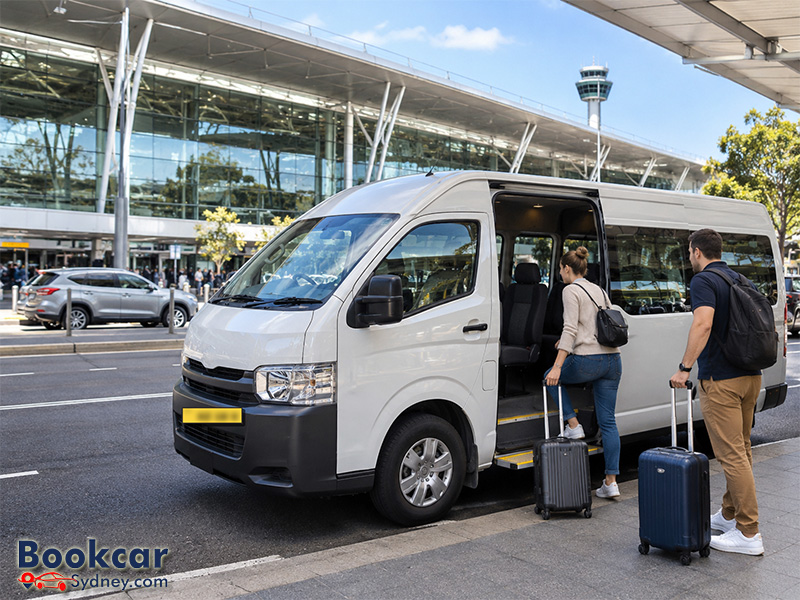
How do Sydney Airport city shuttles work?
Airport-to-city shuttles are road transfers operated by private transport companies. Instead of following the public bus network, they carry passengers from an agreed airport meeting point to designated city stops or, on some services, to selected hotels. With a shared service, you travel alongside other passengers and may wait while they board or are dropped off.
Sydney Airport lists DART Express Shuttle as a city connection operating daily from Terminal 1 (International). Its advertised destinations include Central, Hyde Park, Kings Cross, Darling Harbour and The Rocks. The airport also notes that other shuttle companies serve destinations across Sydney, with routes, departure times, fares and bookings determined by each operator.
“Shuttle” does not always mean the same thing. A scheduled city shuttle may have a set departure and fixed drop-off points; a shared hotel transfer may call at several accommodation properties; and a privately booked transfer carries only your party. Confirm which arrangement you are paying for before choosing.
Where do you catch a shuttle at Sydney Airport?
International arrivals: Terminal 1 (T1)
DART Express is listed for departures from T1. Once you have cleared immigration and collected your bags, follow the meeting instructions on your ticket or booking confirmation. The location of a shuttle meeting point may be different from the public bus stop, taxi rank or rideshare pick-up area.
Allow time to move through arrivals and find the correct vehicle. If your operator gives a desk, bay number or specific exit, use those instructions rather than assuming every shuttle uses the same stop.
Domestic arrivals: Terminals 2 and 3 (T2/T3)
Some shuttle operators may arrange domestic-terminal collections, but do not assume that a T1 city shuttle also departs from T2 or T3. Enter your actual arrival terminal when checking services and make sure the operator confirms a domestic meeting point.
Sydney Airport has separate passenger pick-up arrangements around the domestic terminals. It also identifies a shuttle accessible pick-up area on the Arrivals level for passengers who need it. Travellers requiring a wheelchair-accessible vehicle should arrange this with the operator beforehand; an accessible pick-up area does not guarantee that every shuttle is equipped for every passenger.
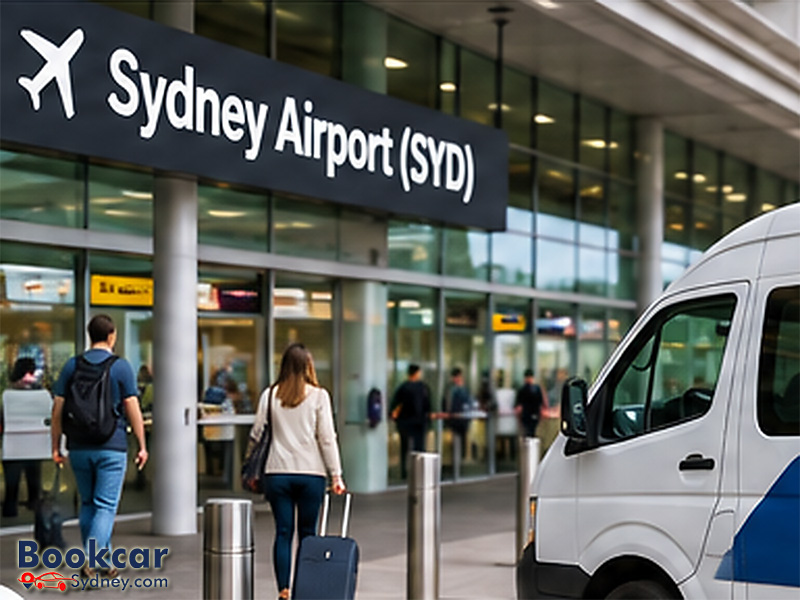
How do you book and board a city shuttle?
Shuttle booking is handled by the individual operator rather than through the Opal public transport system. For example, DART Express provides online ticket booking for its T1 city routes. The practical process is:
- Enter the arrival terminal, travel date, number of passengers and the city destination or stop you need.
- Check the exact pick-up point, departure or collection window, destination address and whether the service is shared or private.
- Review the full fare and conditions for luggage, oversized items, child seats, accessibility and changes or cancellations.
- Provide your flight details if requested, pay using the operator’s accepted method and keep the booking confirmation accessible.
- After landing, collect your baggage, reach the designated meeting point and present your confirmation or digital ticket as instructed.
If your flight is delayed or baggage collection takes longer than expected, contact the shuttle operator using the details on your confirmation. Waiting periods, rebooking rules and whether drivers monitor flight arrivals vary by service. Some operators may sell seats on arrival, but availability should not be assumed.
Which city areas and hotels do shuttle routes serve?
DART Express advertises T1 connections to several central Sydney areas. Its booking website lists named stops, including:
- Central Station area — Mercure Sydney, Little Regent Street.
- Hyde Park area — Vibe Hotel Sydney, Goulburn Street.
- Darling Harbour area — ibis Sydney Barangaroo, Shelley Street.
- The Rocks — Harbour Rocks Hotel, Harrington Street.
- Kings Cross — Holiday Inn Potts Point, Victoria Street.
These are examples of advertised stop locations, not a promise that every hotel in those neighbourhoods receives a door-to-door drop-off. A hotel described as being in Darling Harbour, for instance, may be some distance from the shuttle’s named stop. Check the address and final walk with your luggage before buying a ticket.
For destinations not on a scheduled route, look at another operator’s hotel-transfer coverage or compare a private airport transfer. Airport hotels near Mascot and accommodation in other suburbs may require a different shuttle product from a city-centre service.
How long does the trip take, and what does it cost?
A shuttle journey cannot be assigned one reliable travel time for all passengers. The journey includes any wait for the departure, time spent loading bags, road traffic and possible intermediate stops. Travellers getting off at the last stop on a shared route may spend considerably longer on board than those getting off first.
Shuttle prices also differ by operator, date, destination, passenger numbers and whether the fare is per seat or for an entire vehicle. A lower advertised seat price is not necessarily the cheapest total for a family or group. Compare the full amount for everyone travelling, not just the headline rate.
Before booking, check whether the quoted price includes luggage, any additional pick-up fees, and the particular drop-off you need. For an appointment, cruise connection or onward flight, plan around the operator’s advised arrival window rather than assuming a non-stop journey.
Is a shuttle better than the train, public bus or a private car?
The most useful comparison is the whole trip from the arrivals hall to your actual accommodation, not just the transport fare.
- Airport train: Sydney Airport describes the city train connection as taking about 13 minutes. It is often appealing for a traveller heading near a railway station, but the airport train fare includes a separate station access fee. You may still need to walk or transfer to reach your accommodation.
- Public bus: Transport for NSW runs Route 420 through the airport and nearby suburbs. This is a public route, not a shared hotel shuttle or a direct airport-to-CBD service; a trip to the city usually needs another connection.
- Shared city shuttle: It may suit travellers who want a road transfer to a convenient CBD stop without organising their own vehicle. The trade-off is dependence on the operator’s route, timetable and other passengers.
- Taxi, rideshare or private transfer: These can take your group to a chosen address without unrelated passenger drop-offs, although total cost, pick-up arrangements and available vehicle space differ.
The airport’s terminal-transfer bus is another service entirely: it connects the international and domestic terminal areas, not the city. Do not confuse a terminal shuttle with a ticketed airport-to-city transfer.
What should you check before choosing a shuttle?
Start with the terminal where your flight actually arrives and the exact address where you want to finish. Then compare the operator’s meeting point, last available departure, drop-off address, shared-travel conditions and total cost. Passengers with bulky luggage, mobility requirements or young children should confirm suitable arrangements before paying.
If a scheduled stop is close to your destination and your timing is flexible, a shared shuttle can be a practical option. If a direct arrival time or front-door drop-off is more important, compare a train connection or a booked private vehicle instead.
