


How Does the Sydney Airport T-Bus Shuttle Work?
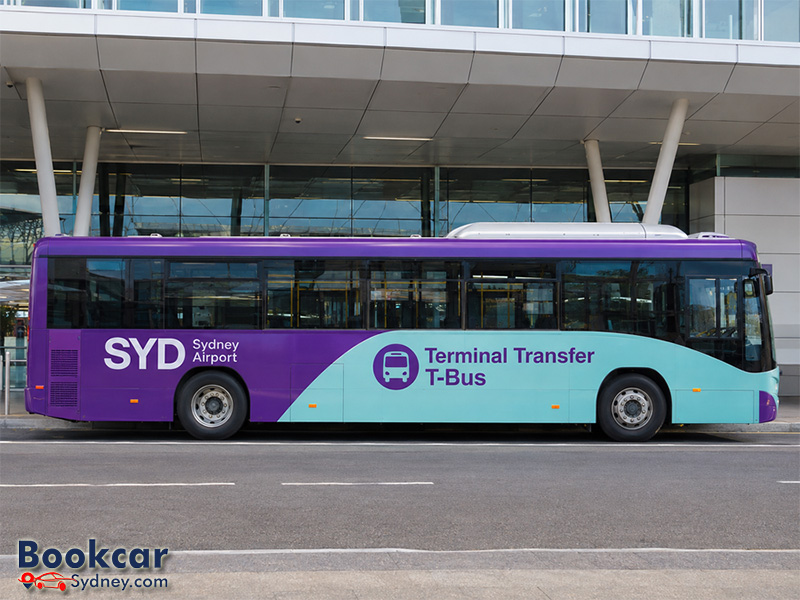
How the Sydney Airport T-Bus works
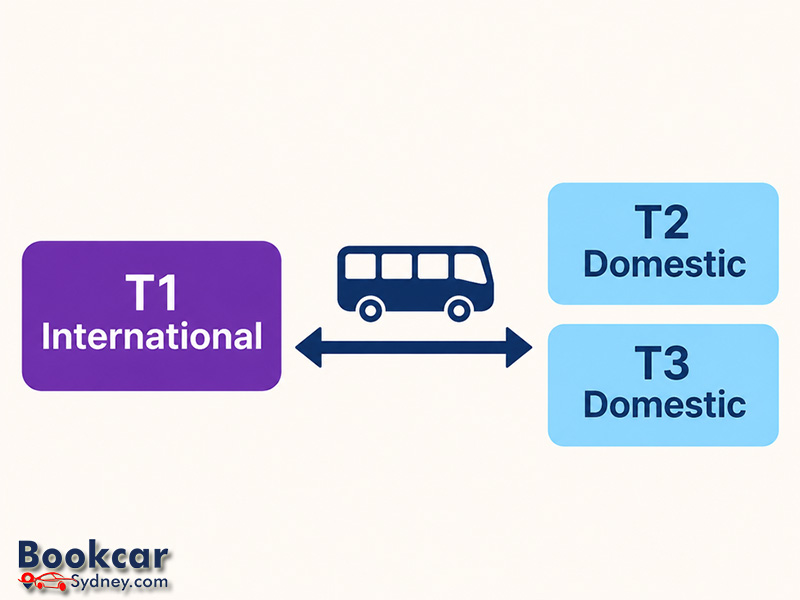
The T-Bus, also called the Terminal Transfer Bus, is Sydney Airport’s complimentary shuttle connecting T1 International with the T2 and T3 Domestic terminals. It operates on the public side of the airport, so passengers catch it outside the terminals rather than at an aircraft gate.
Sydney Airport currently lists the following service details:
- Fare: free; you do not need an Opal card or train ticket for the T-Bus.
- Terminals served: T1 International, T2 Domestic and T3 Domestic.
- Service hours: 5:30 am to 10:30 pm (05:30–22:30).
- Frequency: approximately every 15 minutes.
- Bus journey: approximately 10 minutes between the international and domestic terminal areas.
The published journey time covers the shuttle ride, not the entire flight connection. Time spent leaving the arriving terminal, waiting for the bus, walking to check-in and passing through security or border controls is additional. Services and stop arrangements can change, so follow the signs at the airport if they differ from an older online guide.
Where to catch the T-Bus at T1, T2 and T3
T1 International: Bus Bay 11 on Arrival Court
At T1, go to the Arrivals level and head outside Arrival Hall B. Follow the signs for “T2 Domestic Transfer” towards Bus Bay 11 on Arrival Court, in front of the Terminal Transfer facility. The T-Bus stop moved to Bay 11 on 1 July 2026. Use the current airport signs if they show a temporary change.
T2 and T3 Domestic: outside arrivals
At T2 or T3, go to the Arrivals level and follow the terminal-transfer signs to the bus stop outside your terminal. You do not need to walk to the other domestic terminal before catching the shuttle to T1.
For a closer look at the terminal layouts and stop locations, use the official Sydney Airport terminal maps. Airport signs should take priority if a pick-up point has been temporarily moved.
How to use the T-Bus for a connecting flight
From an international arrival at T1 to a domestic departure
1. After landing at T1, complete the required arrival formalities. This normally means passing through passport control, collecting checked baggage and clearing Customs and biosecurity before leaving the arrivals area.
2. After exiting Arrival Hall B, follow the transfer signs to Bus Bay 11 on Arrival Court and board the free T-Bus towards the domestic terminals.
3. Get off at the terminal shown on your onward flight booking, then complete any required baggage drop, check-in and security screening before going to the gate.
Do not assume your checked bags will automatically appear at the domestic flight. Your airline determines whether bags must be rechecked and where that happens. Even passengers on one booking may need to collect bags on arrival from overseas.
From a domestic arrival at T2 or T3 to an international departure
1. On arrival, confirm whether your checked baggage has been tagged through to your final destination. If not, collect it as directed by your airline.
2. Go to the Arrivals level outside T2 or T3 and find the signed Terminal Transfer Bus stop.
3. Take the T-Bus to T1 International, then follow your airline’s instructions for check-in, bag drop, security and outbound passport control.
The T-Bus is a ground-transport connection, not an airline check-in or baggage-transfer service. If your flights are on separate tickets, allow for the possibility that you will need to complete the usual check-in process again at the next terminal.
How much time should you allow?
With a service scheduled roughly every 15 minutes and a bus ride of around 10 minutes, the transfer itself is straightforward. However, there is no single reliable total connection time for every passenger. The full journey also depends on how quickly you leave the aircraft, find the stop and complete the procedures at your next terminal.
For an international-to-domestic connection, immigration, baggage collection and Customs can make a substantial difference. For a domestic-to-international connection, allow time for any international check-in deadline, security screening and passport control. Separate-ticket travellers should be particularly careful because a delayed incoming flight may leave less time to check in for the next one.
Use the minimum connection time and check-in cut-offs given by your airline, rather than planning around the 10-minute bus ride alone. If you need mobility assistance or help with a tight connection, contact the airline to arrange the most appropriate transfer.
When another transfer option makes more sense
The T-Bus is useful when you are moving between T1 and the domestic terminals during its operating hours. Two situations call for a different approach:
- Moving only between T2 and T3: the domestic terminals are connected by a signed pedestrian route through the P1 car park. Sydney Airport estimates the walk at about five minutes, so the T-Bus is generally unnecessary.
- Travelling before 5:30 am or after 10:30 pm: the free shuttle is not scheduled to operate. The paid Airport Link train, taxi or rideshare may be an alternative, subject to each service’s operating times and availability.
The Airport Link train runs between the international and domestic airport stations, with a train journey of about two minutes. It is a paid service, and station access and walking time need to be considered. Some passengers travelling with Qantas or Virgin Australia may also qualify for separate airline-arranged transfer services; eligibility and procedures depend on the airline and itinerary.
