


Which Sydney Airport Terminals Handle Domestic Flights, and Which Airlines Use Them?
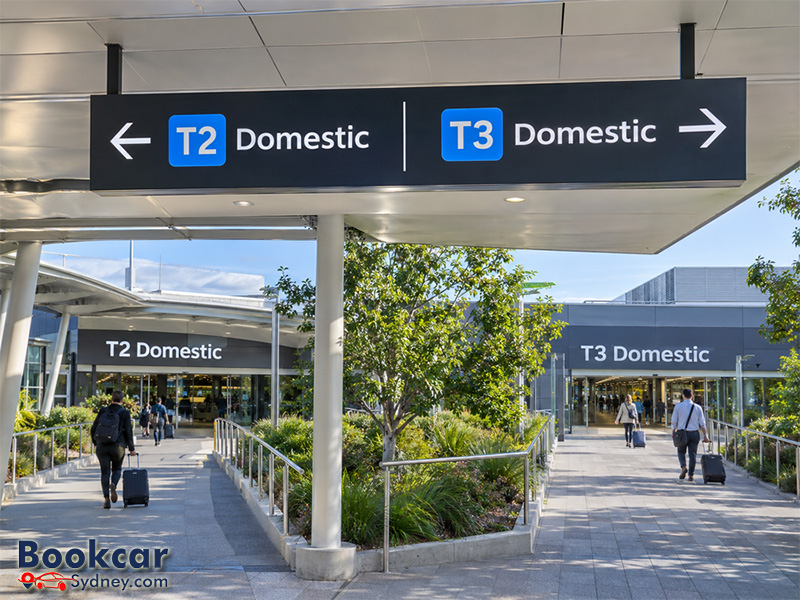
Which airlines use T2 and T3?
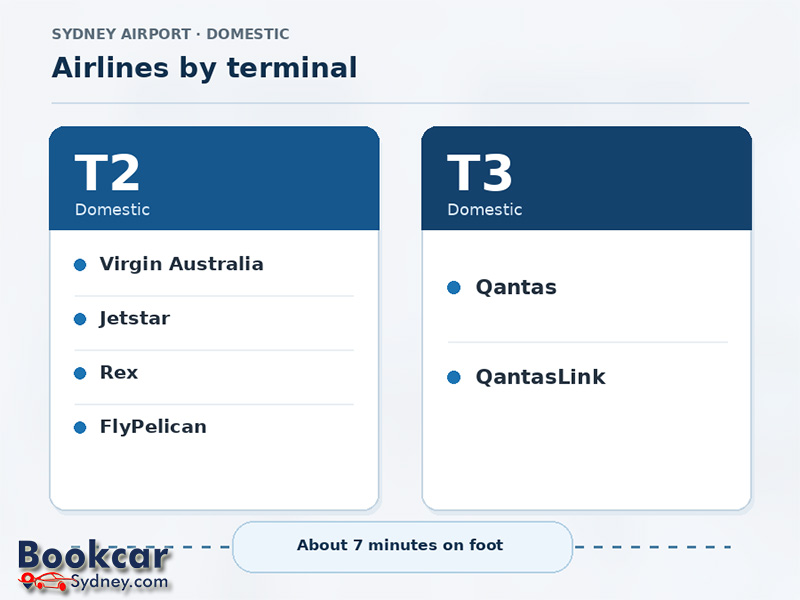
For ordinary domestic departures and arrivals at Sydney Kingsford Smith Airport (SYD), the airline-to-terminal allocation is:
|
Terminal |
Domestic airlines |
Where to go |
|
T2 Domestic |
Virgin Australia, Jetstar, Rex and FlyPelican |
T2 check-in, security and domestic gates |
|
T3 Domestic |
Qantas, including QantasLink services |
T3 Qantas check-in, security and domestic gates |
|
T1 International |
International services, not the regular domestic terminal |
A separate international terminal precinct |
Important update: From 4 November 2026, all Rex and FlyPelican departures and arrivals use T2. These airlines had temporarily used T3 for departures during earlier stages of the T2 redevelopment, so older terminal guides may now be out of date.
Terminal 2: Virgin Australia, Jetstar, Rex and FlyPelican
T2 is Sydney Airport’s multi-airline domestic terminal. It handles Virgin Australia and Jetstar flights as well as Rex and FlyPelican services. These airlines use T2 for both departures and arrivals under the airport’s published allocation.
The terminal has shared passenger facilities, but each airline has its own check-in arrangements. After entering T2, follow the relevant airline signage or the terminal information screens rather than assuming every carrier uses the same row of counters.
T2 is undergoing a major redevelopment scheduled for completion by the end of 2026. Check-in areas and passenger routes may change while work continues. Sydney Airport recommends checking in online where possible and allowing extra time if you need to check a bag.
Terminal 3: Qantas and QantasLink
T3 is the main Qantas domestic terminal at Sydney Airport. Domestic flights operated by Qantas generally depart from and arrive at T3. QantasLink, the Qantas Group’s regional operation, also uses T3 in Sydney.
This matters if your journey includes a regional destination: an aircraft may be smaller or operated under the QantasLink name, but you should not automatically look for a separate regional terminal. Check the flight details and go to the terminal shown for that service.
Jetstar belongs to the wider Qantas Group, but its domestic flights use T2 rather than T3. The airline operating the flight—not the corporate group or the website on which you booked—is the useful distinction.
How to check the correct terminal before departure
The airline allocations above are the normal starting point, but your actual itinerary should take priority. For a specific flight, check the terminal in the airline’s app or booking information and confirm it against Sydney Airport’s departure or arrival listing close to travel time.
- Look for the “operated by” airline. A codeshare ticket can display a different airline’s flight number from the carrier actually operating the aircraft.
- Check whether the flight is domestic or international. T1 is not interchangeable with the two domestic terminals.
- Recheck the terminal and gate on the day of travel, particularly after schedule changes, disruptions or updates to your airline’s check-in arrangements.
- Once inside the correct terminal, use the flight information screens for the assigned gate; a terminal designation does not tell you which gate your flight will use.
If you find conflicting details, use the operating airline’s current instructions and ask its airport staff before joining the check-in queue.
Getting between the domestic terminals
T2 and T3 are close together in the domestic airport precinct. If you arrive at the wrong one, you can walk between them by following the signed pedestrian routes. Qantas estimates the walk at approximately seven minutes; allow longer if you have heavy luggage, need step-free access or are unfamiliar with the airport.
Both domestic terminals are served by Domestic Airport railway station. From the station, follow the signs for T2 or T3 rather than exiting towards the first terminal you see.
T1 International is in a separate precinct. For a connection between T1 and either domestic terminal, Sydney Airport provides a complimentary T-Bus, subject to operating hours. Qantas also offers a separate transfer service for eligible connecting passengers. The airport train and road transport are additional options. Leave enough time for travel between terminal precincts, baggage collection when required, and any new check-in or security procedures.
How early should you arrive?
During the T2 upgrade, Sydney Airport advises arriving at least one hour before a domestic departure if you have hand luggage only, or two hours before departure if you are checking in bags. These are airport recommendations, not a substitute for your airline’s check-in and bag-drop deadlines.
If you are travelling with mobility assistance, children, oversized baggage or a tight onward connection, allow additional time based on your airline’s instructions. Arriving at the correct terminal first is the easiest way to avoid using that buffer on an unnecessary transfer.
Latest Insights
- How Does the Qantas Transfer Bus Work at Sydney Airport?
- Which Terminal Does Rex Use for Departures and Arrivals at Sydney Airport?
- Which Terminals Does Qantas Use at Sydney Airport?
- Which Terminals Does Jetstar Use at Sydney Airport for Domestic and International Flights?
- How to Get from ibis budget Sydney Airport to the International Terminal
- How to Arrange Wheelchair Assistance at Sydney Airport
