


Which Terminals Does Qantas Use at Sydney Airport?
- Qantas terminals at Sydney Airport: quick guide
- When a Qantas domestic flight departs from T1 International
- Where Qantas domestic and QantasLink flights depart: T3
- Does Qantas use Terminal 2 at Sydney Airport?
- Connecting between Qantas domestic T3 and international T1
- How to confirm your Qantas terminal before leaving
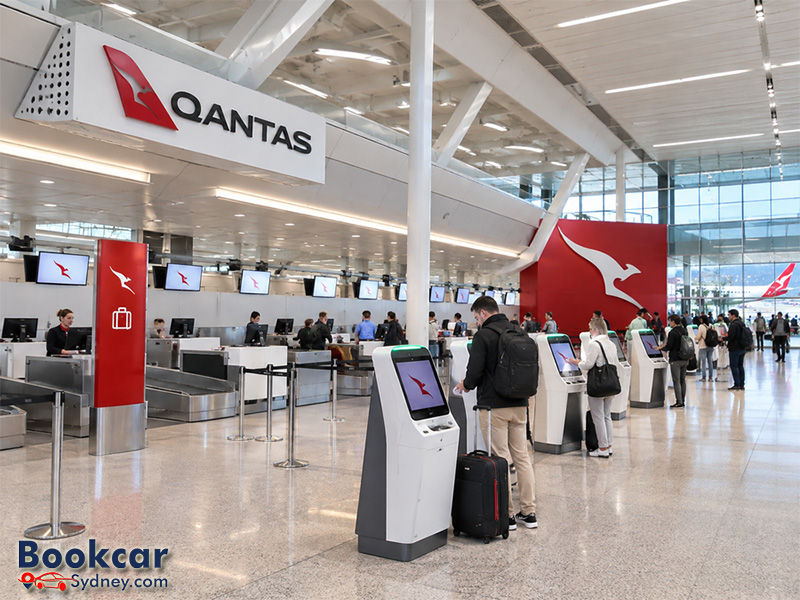
Qantas terminals at Sydney Airport: quick guide
The terminal depends on the flight you are taking and which airline actually operates it, not simply the QF code shown on your ticket.
|
Flight or booking type |
Usual terminal |
|
Qantas-operated domestic flight |
T3 Domestic |
|
QantasLink domestic or regional flight |
T3 Domestic |
|
Qantas-operated international flight |
T1 International |
|
Domestic sector of selected Qantas international services (including QF5, QF6, QF33 or QF34) |
T1 International |
|
Qantas codeshare operated by Jetstar |
Check the operating airline: usually T2 for Jetstar domestic or T1 for Jetstar international |
The table is a guide, not a replacement for your booking confirmation or current departure details. Airline schedules and operating arrangements can change.
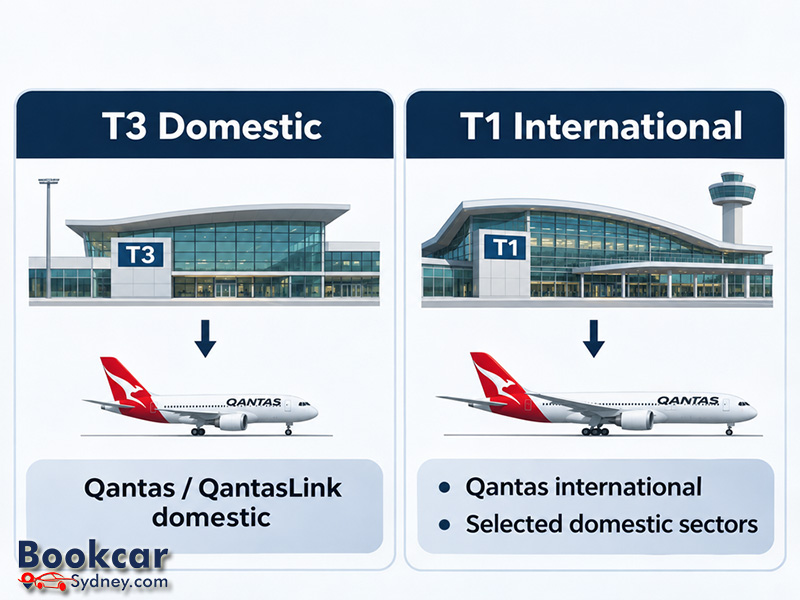
When a Qantas domestic flight departs from T1 International
Not every flight within Australia uses a domestic terminal. Qantas identifies services such as QF5, QF6, QF33 and QF34 between Sydney and Perth as examples of domestic travel on flights departing from an international terminal. If your booking shows one of these services, check that it is operating on your travel date and use T1 when indicated.
For an Australian domestic sector departing from T1, Qantas instructs passengers to visit the airport check-in counter, even if they have checked in online. Bring your flight details and photo identification. Staff check your identity and issue a printed boarding pass with a domestic “D” sticker.
International-terminal security and liquid restrictions apply to these flights. Keep the boarding pass available for Australian Border Force checks. Qantas recommends arriving two hours before departure for this type of domestic flight and states that airport check-in closes 60 minutes before departure.
Where Qantas domestic and QantasLink flights depart: T3
Terminal 3 is Sydney Airport’s main terminal for Qantas-operated domestic flights and QantasLink regional services. It has Qantas check-in facilities, self-service options and domestic departure gates.
If you have already checked in and have no checked bag, follow the signs to security and your assigned gate. If you are checking a bag, use the relevant Qantas bag-tag and bag-drop facilities. Look for the current counter and gate details on the airport screens or in the Qantas App.
Qantas normally directs QF400-and-above services to domestic terminals; for Sydney, that generally means T3 when Qantas operates the flight. Always confirm the operating airline and terminal if the itinerary includes a partner flight.
Does Qantas use Terminal 2 at Sydney Airport?
Qantas-operated domestic flights generally use T3, not T2. However, a booking carrying a QF flight number can be a codeshare operated by another airline. Jetstar-operated domestic flights use T2, while Jetstar international flights use T1. Follow the terminal for the operating airline shown on your itinerary rather than assuming that every QF-numbered flight leaves from T3.
T2 and T3 are separate domestic terminals in the same precinct. Sydney Airport says passengers can walk between them via the pedestrian route through the P1 car park in approximately five minutes.
Connecting between Qantas domestic T3 and international T1
T1 is in a different airport precinct from T2 and T3. You cannot walk between T1 and the domestic terminals, so allow time for a transfer when your itinerary involves both terminals.
Depending on your itinerary and eligibility, you can use:
- Qantas Terminal Transfer: available for qualifying onward connections involving Qantas or eligible partner flights between T1 and T3. Check the instructions for your itinerary.
- Sydney Airport T-Bus: a complimentary shuttle connecting T1 with T2/T3. Sydney Airport lists services roughly every 15 minutes from 5:30 am to 10:30 pm, with a journey of about 10 minutes.
- Airport Link train: a paid option between International Airport and Domestic Airport stations. The train ride itself takes about two minutes; allow extra time for station access and waiting.
If you arrive internationally and then connect to a domestic Qantas flight, you generally need to clear immigration, collect your checked baggage, pass through customs and follow Qantas’s instructions for rechecking bags. Transfer arrangements depend on the flights and booking, so confirm them in advance.
How to confirm your Qantas terminal before leaving
- Check your booking confirmation for the flight number, departure terminal and operating airline.
- Open your trip in the Qantas App or Manage Booking to review flight and departure details.
- Check the Sydney Airport live departures listing, particularly if your flight is a codeshare or an unusual domestic sector.
- When you arrive, use the airport departure screens for your assigned check-in area and gate; these can change.
For a standard Qantas domestic flight, head to T3; for a Qantas international departure, head to T1. The important exceptions are domestic legs departing from T1 and codeshare flights operated by another airline.
Latest Insights
- How Does the Qantas Transfer Bus Work at Sydney Airport?
- Which Terminal Does Rex Use for Departures and Arrivals at Sydney Airport?
- Which Terminals Does Jetstar Use at Sydney Airport for Domestic and International Flights?
- Which Sydney Airport Terminals Handle Domestic Flights, and Which Airlines Use Them?
- How to Get from ibis budget Sydney Airport to the International Terminal
- How to Arrange Wheelchair Assistance at Sydney Airport
