


How to Arrange Wheelchair Assistance at Sydney Airport
- Book wheelchair assistance through your airline
- Describe the level of wheelchair assistance you need
- Request assistance from Qantas, Virgin Australia or Jetstar
- Where to get wheelchair help at Sydney Airport
- What to expect at security, boarding and on arrival
- If you are travelling with your own wheelchair
- If you have not booked assistance in advance
Book wheelchair assistance through your airline
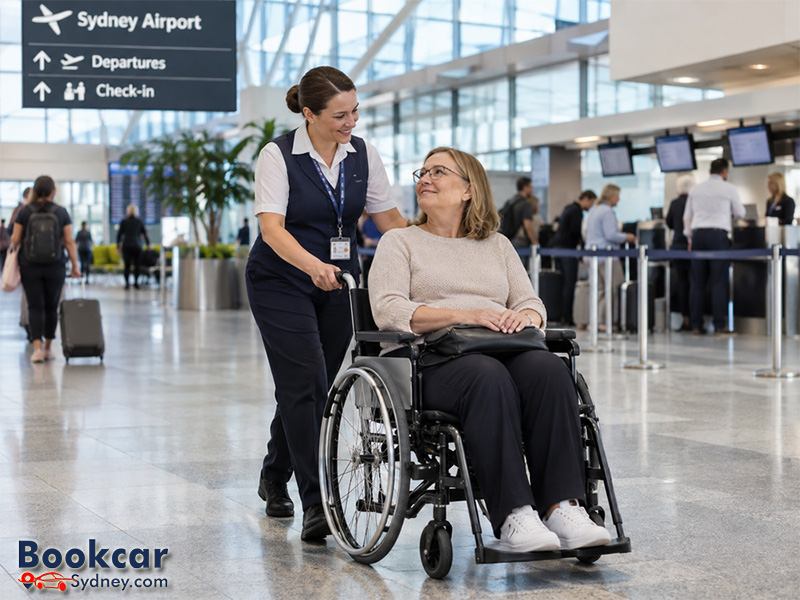
The quickest way to organise support is to add a special assistance request to your flight booking. Sydney Airport does not operate a single booking service for airline-provided wheelchairs. Airlines have different procedures and may need advance notice to arrange appropriate staff and equipment.
- Contact your airline when booking, or ask your travel agent to add a wheelchair assistance request to your reservation.
- Explain whether you need a wheelchair for long terminal distances, help using stairs, assistance getting into your aircraft seat, or a combination of these.
- Tell the airline if you are travelling with your own manual or powered wheelchair and provide the device information it requests.
- Confirm where assistance will start and finish, including any help needed on arrival or while connecting to another flight.
- Reconfirm the arrangements at least 48 hours before travel and follow the airline’s specific check-in instructions.
Make the request as early as possible. A last-minute request may be subject to available staff, equipment and operational limits, and some airlines cannot guarantee assistance without advance notice.
Describe the level of wheelchair assistance you need
You do not need to know aviation codes to describe your mobility needs. However, airlines may record assistance using the standard WCHR, WCHS and WCHC codes. These distinguish between difficulty walking long distances, difficulty using stairs and needing assistance within the aircraft cabin.
|
Assistance code |
What to tell your airline |
|
WCHR |
You cannot comfortably cover long distances but can manage steps and move to your aircraft seat without assistance. |
|
WCHS |
You need help with distances and cannot use aircraft steps without assistance, but can move within the cabin to your seat. |
|
WCHC |
You need more extensive mobility help, potentially including transfer assistance to or from your aircraft seat. |
If you bring your own mobility aid, be ready to describe its type, weight and folded or adjusted dimensions. For a powered wheelchair, the airline may also need the battery type and information about preparing the device for transport. Ask what transfers its staff can safely provide; policies and equipment vary between airlines.
Request assistance from Qantas, Virgin Australia or Jetstar
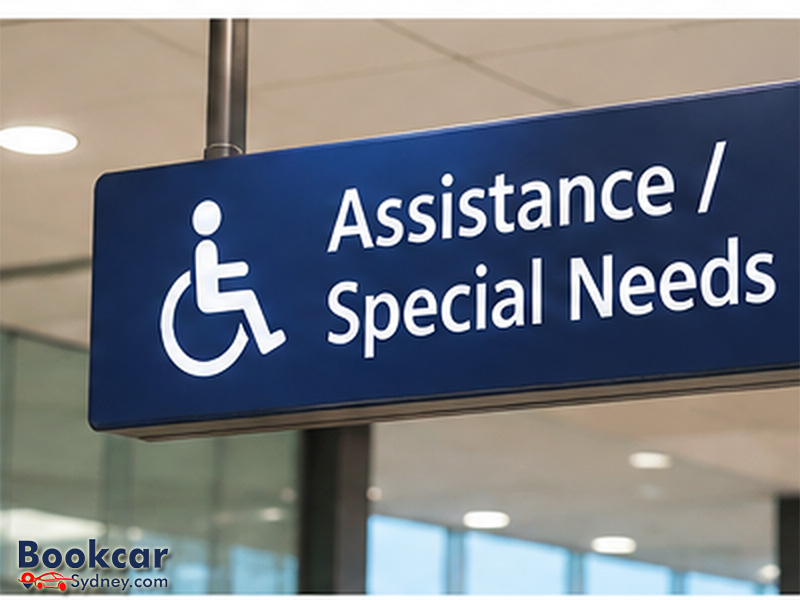
If you are flying with one of these airlines, use its own accessibility process rather than trying to book a wheelchair through the airport.
- Qantas: Submit a wheelchair or mobility aid request through Qantas mobility assistance. Qantas recommends at least 48 hours’ notice.
- Virgin Australia: Use the Specific Service Request form when booking assistance online. For travel within the next 24 hours, contact the airline’s Guest Contact Centre.
- Jetstar: Tell Jetstar the wheelchair assistance level you need and whether you are bringing a mobility aid. Read its wheelchair assistance guidance and contact the airline as early as possible.
Flying with another carrier? Contact the operating airline directly, especially on an international itinerary or a flight booked through a partner airline. If different airlines operate connecting flights, check that the assistance arrangements cover each sector.
Where to get wheelchair help at Sydney Airport
Free kerbside help at T1 and T2 departures
Sydney Airport provides a free kerbside-to-check-in wheelchair assistance service at T1 International and T2 Domestic, for departing passengers only. It is not advertised as a service at T3, and it does not replace the wheelchair assistance that must be arranged with your airline for the rest of the journey.
At T1 or T2, use the marked accessible drop-off area. Tell a kerbside team member that you need mobility assistance; they can arrange for a customer service team member to take you to your airline’s check-in desk or a waiting area if check-in has not opened. A vehicle must not be left unattended while assistance is being arranged.
This airport-run service does not include handling baggage or personal belongings. If you cannot manage luggage independently, arrange that help separately with your airline or travel companion.
Help inside the terminal and at T3
For assistance beyond check-in, tell airline staff about your confirmed booking when you arrive. If you are departing from T3 Domestic, confirm any kerbside or terminal-entry support directly with your airline in advance. Check-in counters are on Level 2 (Departures) across Sydney Airport’s three terminals.
What to expect at security, boarding and on arrival
Wheelchair assistance does not remove the requirement to complete security screening. Sydney Airport has dedicated special assistance lanes; let screening officers know about your wheelchair, mobility aid or any restrictions on standing or walking. If you cannot use the usual screening equipment, staff will explain the relevant alternative screening process.
Your airline manages boarding assistance, including getting to the gate and transferring to an aircraft seat where that service is available. Arrive in time for your airline’s mobility assistance check-in requirements, not just the general flight check-in deadline.
When you land, the arrangements may include help leaving the aircraft and reaching baggage reclaim. Ask your airline whether your own wheelchair will be returned at the gate, aircraft door or baggage area, as this can depend on the airline, aircraft, airport and wheelchair type. Request assistance for terminal changes or connecting flights separately rather than assuming a connection is automatically covered.
If you are travelling with your own wheelchair
Airlines may carry manual and powered wheelchairs subject to aircraft dimensions, handling limitations and battery-safety requirements. Before travelling, ask whether you may use your own wheelchair up to the boarding gate, when it must be handed over and how you will receive it at your destination.
- Record the wheelchair’s dimensions, weight and any removable or detachable parts.
- For powered models, identify the battery chemistry and follow your airline’s preparation instructions.
- Explain whether you can transfer independently and what type of assistance you need to reach an aircraft seat.
- Keep essential operating instructions available, especially if the wheelchair must be folded or placed in freewheel mode.
If your wheelchair cannot meet your airline’s carriage requirements, discuss the options before you travel. Do not assume an aircraft can take every mobility aid.
If you have not booked assistance in advance
Contact your airline immediately, even if departure is close. Explain the assistance you need and ask it to confirm what staff and equipment can be provided. If you are already at the airport, speak to airline check-in staff. Support requested on the day may be delayed or unavailable, so do not rely on arriving early as a substitute for making a reservation.
For wheelchair assistance from the departure kerb to check-in at T1 or T2, you can also approach the airport’s kerbside staff. This limited service does not confirm that an airline can provide boarding or in-flight transfer assistance at short notice.
