


Airport Transfer vs Taxi Cost
- What is airport transfer vs taxi Sydney cost comparison?
- Airport transfer vs taxi Sydney cost overview
- What factors affect airport transfer vs taxi cost Sydney?
- Fixed price vs metered fare Sydney explained
- Airport transfer vs taxi vs rideshare cost comparison Sydney
- Pros and cons airport transfer taxi rideshare Sydney
- Which is best airport transfer taxi rideshare Sydney?
- When to choose airport transfer taxi or rideshare Sydney?
- Safety reliability airport transfer taxi rideshare Sydney
- Tips to save cost airport transfer taxi Sydney
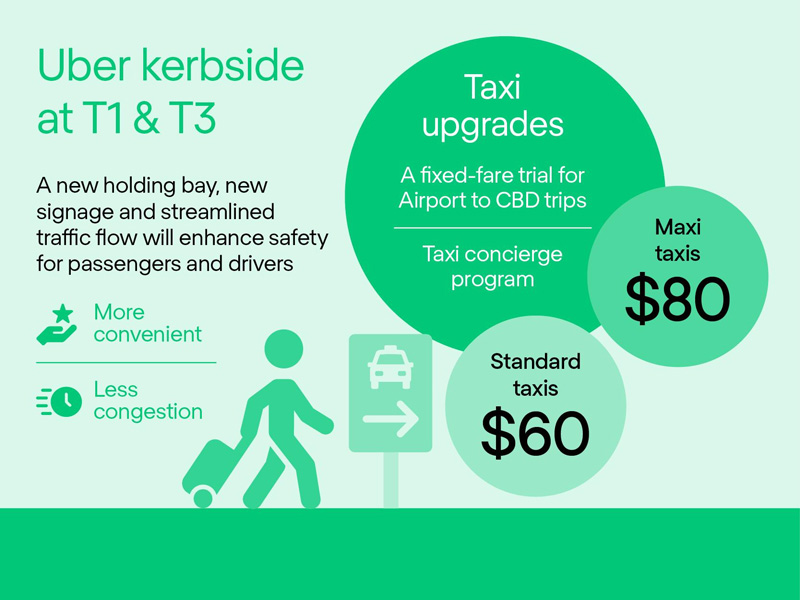
What is airport transfer vs taxi Sydney cost comparison?
Airport transfer service sydney
Airport transfer service in Sydney refers to pre-booked private transportation between Sydney Airport and your destination. This service is typically arranged in advance and offers fixed pricing, professional drivers, and tailored vehicle options such as sedans, SUVs, or vans.
From a cost perspective, airport transfers are designed for price certainty and service consistency, making them popular for business travelers, families, and groups with luggage.
Taxi service sydney
Taxi service in Sydney operates on a metered fare system, where the total cost depends on distance, time, and traffic conditions. Taxis are readily available at airport ranks and do not require prior booking.
In a cost comparison context, taxis offer instant availability, but the final fare can vary significantly due to waiting time, peak traffic, or route changes.
Rideshare service uber ola didi sydney
Rideshare services such as Uber, Ola, and DiDi function through mobile apps and use dynamic pricing algorithms. Prices fluctuate based on demand, traffic, and driver availability.
Compared to taxis and airport transfers, rideshare services often provide competitive base fares, but costs can increase sharply during surge pricing periods.
Airport pickup vs city transfer
Airport pickup refers to transportation from the airport to a destination, often including features like meet and greet, flight tracking, and waiting time. City transfer refers to travel between locations within Sydney.
Cost differences arise because airport pickups may include additional airport-related fees, while city transfers are generally simpler and more predictable in pricing.
Fixed price vs metered fare
Fixed price is a pre-agreed total cost offered by airport transfer services, regardless of traffic conditions. Metered fare is calculated in real time based on distance and time traveled, commonly used by taxis.
In cost comparison, fixed pricing provides budget certainty, while metered fares carry the risk of unexpected increases during congestion or delays.
Airport transfer vs taxi Sydney cost overview
Average airport transfer cost sydney
The average cost of an airport transfer in Sydney typically ranges from AUD 60 to AUD 120, depending on vehicle type, distance, and service level.
Standard sedan transfers to the CBD are usually at the lower end, while larger vehicles or premium services cost more. The key advantage is that this price is fixed and confirmed before travel.
Average taxi fare sydney airport
Taxi fares from Sydney Airport to the city center generally range between AUD 45 and AUD 70 under normal traffic conditions.
However, the final fare can increase due to traffic congestion, waiting time, tolls, and airport surcharges, making the total cost less predictable than a fixed-price transfer.
Rideshare pricing sydney airport
Rideshare fares for the same route can range from AUD 35 to AUD 80, depending on demand and time of day.
During off-peak hours, rideshare is often the cheapest option. However, during peak periods or bad weather, surge pricing can significantly increase costs, sometimes exceeding taxi fares.
Cost per distance comparison
Airport transfer services generally offer flat-rate pricing, meaning the cost per kilometer is averaged and fixed.
Taxis calculate fares using a base fare plus distance and time increments, resulting in variable cost per distance.
Rideshare pricing combines both models, using estimated distance but adjusting based on real-time demand and supply conditions.
Hidden fees and surcharges
Each transport option may include additional costs that affect the final price:
- Airport transfers may include parking fees, waiting time allowances, or premium service charges
- Taxis often add airport access fees, tolls, and late-night surcharges
- Rideshare services can include booking fees, surge pricing, and cancellation fees
Understanding these hidden charges is essential for accurate cost comparison, as they can significantly impact the true total cost of travel in Sydney.
What factors affect airport transfer vs taxi cost Sydney?
Distance and route pricing
Distance is one of the most fundamental factors influencing transportation cost in Sydney.
For airport transfers, pricing is typically calculated based on predefined zones or fixed routes, meaning the cost remains stable regardless of minor route changes.
In contrast, taxi fares are directly affected by actual distance traveled and route efficiency, which means detours, traffic diversions, or longer routes can increase the total fare.
Rideshare services estimate distance in advance but may adjust pricing based on real-time route conditions, making them partially predictable but still variable.
Time of travel peak hour off peak
The time of travel plays a critical role in determining cost differences.
During peak hours, such as morning and evening rush periods, taxis may accumulate higher fares due to slower traffic and increased waiting time.
Rideshare services often apply surge pricing during high-demand periods, which can significantly raise costs.
Airport transfer services, however, usually maintain a fixed rate regardless of traffic conditions, offering more cost stability during peak times.
Vehicle type sedan van luxury
Vehicle selection directly impacts pricing across all transport options.
Airport transfers provide a range of vehicles, from standard sedans to luxury cars and large vans, with pricing adjusted accordingly.
Taxis generally have limited vehicle categories, but larger taxis or premium services may incur higher base fares.
Rideshare platforms offer multiple service tiers (economy, premium, XL), where the cost increases based on comfort level, space, and service quality.
Luggage and passenger count
The number of passengers and amount of luggage can influence the total cost.
Airport transfer services often require selecting a vehicle suitable for group size and luggage capacity, which may increase the base price.
Taxis may charge additional fees if luggage exceeds standard limits or requires a larger vehicle.
Rideshare services may require upgrading to larger vehicle categories, which can significantly increase the fare compared to standard options.
Tolls airport fees parking charges
Additional charges such as tolls, airport access fees, and parking can impact the final cost.
Airport transfers may include these fees in the quoted fixed price, depending on the provider.
Taxis typically add tolls and airport fees on top of the metered fare, increasing the total cost.
Rideshare services may include or exclude these charges depending on the platform, but they are often itemized separately, making it important to review the fare breakdown.
Fixed price vs metered fare Sydney explained
Fixed price airport transfer model
The fixed price model used by airport transfer services offers a pre-determined total cost before the journey begins.
This model is based on factors such as distance, vehicle type, and service level, but once confirmed, the price does not change due to traffic or delays.
It is particularly beneficial for travelers who want budget certainty and predictable expenses.
Taxi meter calculation sydney
Taxi fares in Sydney are calculated using a meter system that combines a base fare with incremental charges for distance and time.
The meter continues running during traffic delays or stops, which means the final cost can increase even if the distance remains the same.
This system provides flexibility but introduces cost variability and uncertainty.
Rideshare dynamic pricing surge
Rideshare platforms use dynamic pricing algorithms that adjust fares based on demand and supply conditions.
During periods of high demand, such as peak hours or bad weather, surge pricing can significantly increase the cost.
While rideshare apps provide fare estimates before booking, the actual price may still fluctuate depending on real-time market conditions.
Price transparency comparison
Airport transfers offer the highest level of price transparency, as the total cost is known in advance with minimal variation.
Taxis provide moderate transparency, as the fare structure is regulated but the final cost depends on journey conditions.
Rideshare services offer estimated pricing upfront, but dynamic adjustments can reduce transparency, especially during surge periods.
Risk of unexpected cost
The risk of unexpected cost varies across transport options.
Airport transfers have the lowest risk, as pricing is fixed and confirmed מראש.
Taxis carry a moderate risk due to traffic-related delays and additional charges.
Rideshare services present the highest risk in certain situations, particularly when surge pricing or hidden fees are applied unexpectedly.

Airport transfer vs taxi vs rideshare cost comparison Sydney
Airport transfer total cost estimate
Airport transfer services in Sydney typically provide a fixed total cost ranging from AUD 60 to AUD 120 for standard routes such as Sydney Airport to CBD.
This price often includes waiting time, driver service, and in some cases tolls, making it a predictable and all-inclusive option.
For larger groups or premium vehicles, the cost increases but remains stable once booked.
Taxi total fare estimate sydney airport
Taxi fares from Sydney Airport to the city center generally fall between AUD 45 and AUD 70, depending on traffic and route conditions.
Additional costs such as airport fees, tolls, and waiting time can increase the final fare.
Unlike airport transfers, taxis offer variable pricing, which may lead to higher costs during congestion.
Uber ola didi fare comparison
Rideshare services like Uber, Ola, and DiDi usually offer fares ranging from AUD 35 to AUD 80 for similar routes.
While they can be cheaper during off-peak hours, surge pricing during high demand can push fares above taxi or even airport transfer rates.
Each platform uses its own pricing model, so comparing multiple apps can help find the most cost-effective option at a given time.
Budget vs premium transport cost
Budget transport options typically include standard rideshare services or taxis during low traffic periods.
Premium options include chauffeur-driven airport transfers or luxury rideshare categories, which offer higher comfort but at a higher cost.
Choosing between budget and premium depends on priorities such as comfort, reliability, and travel experience.
Cost efficiency by travel scenario
Cost efficiency varies depending on the travel scenario.
Airport transfers are often more efficient for groups, families, or travelers with luggage, as the fixed price can be shared.
Taxis are efficient for short, immediate trips without prior booking.
Rideshare services are most efficient when demand is low and surge pricing is not active.
Pros and cons airport transfer taxi rideshare Sydney
Advantages airport transfer private service
Airport transfer services offer fixed pricing, professional drivers, and reliable scheduling.
They are ideal for travelers who value comfort, punctuality, and a stress-free experience, especially for airport pickups with flight tracking.
Advantages taxi service sydney
Taxis provide instant availability at airport ranks, eliminating the need for advance booking.
They are convenient for travelers who need immediate transportation and prefer a regulated fare system.
Advantages rideshare uber ola didi
Rideshare services offer app-based convenience, flexible booking, and competitive pricing.
They allow users to compare fares, track drivers in real time, and choose from multiple service levels.
Disadvantages airport transfer taxi rideshare
Airport transfers may require advance booking and higher upfront cost.
Taxis can result in unpredictable fares due to traffic and waiting time.
Rideshare services may face surge pricing, driver cancellations, or availability issues during peak demand.
When each option is most suitable
Airport transfers are best for planned trips, business travel, and group transport.
Taxis are suitable for last-minute travel and short distances.
Rideshare services are ideal for flexible, app-based booking when pricing conditions are favorable.
Which is best airport transfer taxi rideshare Sydney?
Best option for business travel sydney airport
Airport transfer services are the best choice for business travelers due to punctuality, fixed pricing, and professional service.
They ensure a smooth and reliable experience, which is critical for tight schedules.
Best option for family group luggage sydney
For families or groups with luggage, airport transfers or larger rideshare vehicles are more suitable.
They provide adequate space and predictable pricing, reducing stress during travel.
Best option for budget travelers sydney
Budget travelers often prefer rideshare services during off-peak hours, as they can offer the lowest fares available.
However, comparing prices before booking is essential to avoid surge costs.
Best option for late night airport transfer sydney
Late-night travel may limit rideshare availability and increase surge pricing.
Airport transfers or taxis are more reliable during these hours, with consistent availability and safer options.
Best option for comfort and reliability
Airport transfer services stand out for comfort, reliability, and service quality.
They provide a controlled experience with minimal risk of delays or unexpected costs.
When to choose airport transfer taxi or rideshare Sydney?
Choose airport transfer for fixed schedule comfort
Airport transfers are ideal when you need a pre-arranged schedule, guaranteed pickup, and a comfortable journey.
They are especially useful for early flights or important appointments.
Choose taxi for instant pickup at airport
Taxis are the best option when you need immediate transportation without prior booking.
They are readily available at airport terminals and suitable for quick departures.
Choose rideshare for flexible booking via app
Rideshare services are perfect for users who prefer digital booking, fare comparison, and real-time tracking.
They offer flexibility and convenience through mobile apps.
Peak hour and surge pricing scenarios
During peak hours, taxis may become more expensive due to traffic, while rideshare services may apply surge pricing.
Airport transfers remain the most stable option in these scenarios due to fixed pricing.
International vs domestic airport travel sydney
International travel often involves more luggage and longer processing times, making airport transfers more suitable.
Domestic travel allows for more flexibility, where taxis or rideshare services may be sufficient.
Safety reliability airport transfer taxi rideshare Sydney
Driver verification and licensing sydney
All transport services in Sydney require drivers to meet licensing and regulatory standards.
Airport transfer companies often conduct additional screening and training for drivers.
Service reliability and availability
Airport transfers provide high reliability due to pre-booking and scheduling systems.
Taxis offer consistent availability at airport ranks, while rideshare availability depends on driver supply and demand.
Customer support and communication
Airport transfer services typically offer direct customer support and clear communication channels.
Rideshare platforms provide in-app support, while taxi services may have limited direct communication options.
Insurance and passenger safety
All services are required to maintain insurance coverage for passenger safety.
Airport transfer providers often emphasize safety as part of their premium service offering.
Real time tracking and updates
Rideshare services excel in real-time tracking and app-based updates.
Airport transfer services may also provide tracking and flight monitoring, while taxis generally do not offer advanced tracking features.
Tips to save cost airport transfer taxi Sydney
Book airport transfer in advance
Booking airport transfer services in advance allows you to lock in fixed pricing and avoid last-minute increases.
Avoid peak hour taxi rides
Traveling outside peak hours can help reduce taxi fares by minimizing waiting time and traffic-related charges.
Compare rideshare pricing before booking
Checking multiple rideshare apps can help identify the lowest available fare at a given time.
Choose right vehicle size
Selecting the appropriate vehicle size ensures you do not pay extra for unused capacity or unnecessary upgrades.
Use fixed price service to avoid surge
Using fixed-price airport transfer services helps avoid unexpected costs caused by surge pricing or traffic delays.
Conclusion
Choosing between airport transfer, taxi, and rideshare in Sydney depends on your priority: cost stability, flexibility, or convenience.
Airport transfer services are the most reliable option when you need fixed pricing, guaranteed pickup, and a smooth travel experience, especially for business trips, families, or group travel with luggage.
Taxis remain a practical choice for instant availability at the airport, but the final fare can vary depending on traffic, route, and additional charges.
Rideshare services offer the most flexibility and can be the cheapest option during off-peak times, but surge pricing and availability fluctuations make them less predictable.
In summary, if you want cost certainty → choose airport transfer, if you want instant pickup → choose taxi, and if you want flexible app-based booking → choose rideshare.
Q&A about Airport Transfer vs Taxi Cost
Is airport transfer cheaper than taxi sydney?
Airport transfers can be cheaper for longer distances or group travel due to fixed pricing, while taxis may be cheaper for short trips during low traffic.
How much is taxi from sydney airport to city?
Taxi fares typically range from AUD 45 to AUD 70, depending on traffic, tolls, and time of travel.
Is uber cheaper than taxi sydney airport?
Uber can be cheaper during off-peak hours, but during surge pricing, it may become more expensive than taxis or airport transfers.
What is fixed price airport transfer?
A fixed price airport transfer is a pre-agreed fare that does not change, regardless of traffic or delays.
Which option is best for group travel sydney?
Airport transfers are usually the best option for group travel due to shared cost, larger vehicles, and predictable pricing.
Latest Insights
- Is There a Free Bus from Sydney Domestic to International?
- Can You Walk from Domestic to International at Sydney Airport?
- How Far Apart Are Sydney Airport’s International and Domestic Terminals?
- How Long Does a Domestic to International Transfer Take at Sydney Airport?
- Is There a Free Shuttle at Sydney Airport?
- Airport Transfer With Luggage
