


Chauffeur Airport Experience
- What happens before a chauffeur airport transfer begins?
- How does flight tracking affect an airport arrival?
- What is the chauffeur pickup experience like at Sydney Airport?
- What does the journey from Sydney Airport feel like?
- What is a chauffeur transfer to Sydney Airport like?
- What makes a chauffeur airport transfer different from an ordinary airport ride?
- Why is communication part of the chauffeur experience?
- What should passengers expect from a professional chauffeur?
- How does Sydney Airport affect the chauffeur experience?
- How do chauffeur transfers work for families and passengers with special requirements?
- What is the experience like for late-night or early-morning airport travel?
- Is chauffeur airport transfer pricing always fixed?
- Who benefits most from the chauffeur airport transfer experience?
- What can vary between chauffeur airport transfer providers?
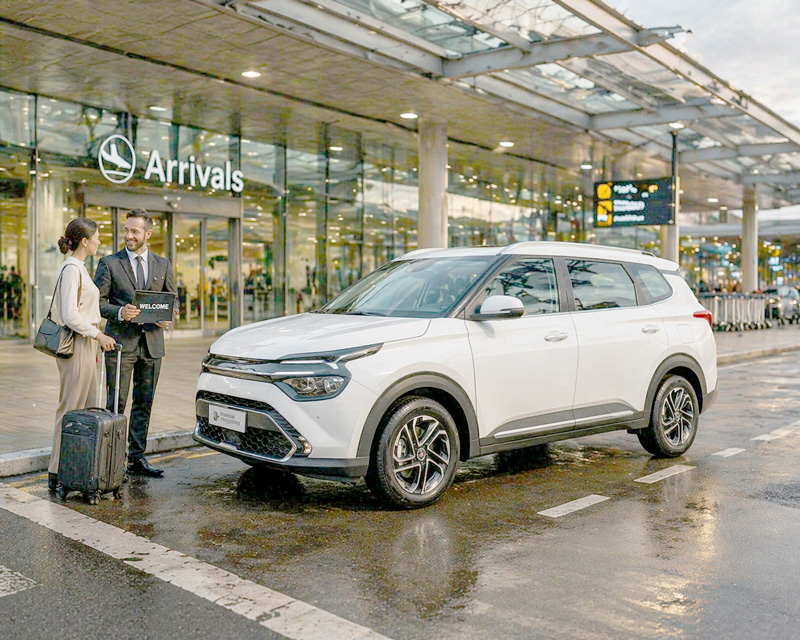
For an arrival, this can mean having transport already coordinated while the flight is still in the air, receiving clear instructions about where to meet the chauffeur, getting assistance with luggage, and travelling directly to the destination. For a departure, it means a pre-arranged vehicle arrives at the nominated address and takes the passenger directly to the correct airport terminal.
The exact vehicle class, waiting allowance, meeting procedure, child-seat availability, amenities, airport charges, and other inclusions vary between providers. A premium experience therefore depends not only on the car and driver, but also on how effectively the service coordinates the different stages of the transfer.
What happens before a chauffeur airport transfer begins?
The experience starts before the chauffeur meets the passenger. A well-organised airport transfer uses the booking information to prepare the journey in advance rather than waiting until the passenger reaches the kerb.
The booking connects the important travel details
For an airport transfer, the operator will normally need information such as:
-
Flight details for an airport arrival
-
Pickup address and requested time for an airport departure
-
Destination
-
Passenger count
-
Luggage requirements
-
Contact details
-
Vehicle requirements
-
Child or booster seat requests where available
-
Other special assistance that needs to be arranged in advance
These details are operational rather than cosmetic. A vehicle that technically seats the required number of people may not have enough practical luggage capacity once large suitcases, carry-on bags, prams, mobility equipment, or other items are included.
Providing accurate information before travel allows the provider to assign a vehicle that fits the actual journey rather than simply the number of passengers.
The passenger should receive clear confirmation
Pre-arrival coordination is an important part of the chauffeur experience.
Depending on the provider, confirmation may include the booking details, vehicle information, chauffeur or operator contact information, and instructions explaining where the passenger and chauffeur will meet.
This communication layer becomes particularly useful at an airport. Instead of landing and then trying to determine where the driver is, the passenger has an agreed process for making contact.
If plans change or the passenger cannot immediately locate the chauffeur, there should also be a clear communication channel through the driver, dispatch team, or booking contact.
How does flight tracking affect an airport arrival?
Flight monitoring allows the operator to coordinate the planned pickup against the actual progress of the flight rather than relying only on its original timetable.
If an aircraft arrives earlier or later than scheduled, a provider using live flight information can adjust dispatch timing accordingly. This reduces the need for the passenger to manually reorganise the car simply because the flight time changed.
Flight tracking does not, however, remove every source of uncertainty after landing.
The time between touchdown and meeting the chauffeur can also depend on:
-
The arrival terminal
-
Immigration processing for international passengers
-
Baggage collection
-
Customs and biosecurity procedures
-
Passenger mobility
-
Airport congestion
-
How quickly the passenger reaches the agreed meeting point
International and domestic arrivals can therefore produce different time-to-meet patterns even when both flights land on schedule.
The provider's waiting policy remains important. Passengers should understand when complimentary waiting begins, how much waiting is included, and what happens if terminal processing takes longer than expected.
What is the chauffeur pickup experience like at Sydney Airport?
The most noticeable part of an arrival transfer is often the transition from the terminal to the vehicle.
Instead of reaching the arrivals area and then deciding how to leave the airport, the passenger already has a booked service and instructions for connecting with the chauffeur.
The meeting point is arranged rather than improvised
Depending on the terminal and service level, the chauffeur may meet the passenger in or near the arrivals area, use a name sign, or arrange contact at a designated pickup location.
The exact procedure matters because Sydney Airport is not one single pickup environment. International and domestic terminals have different layouts and ground-transport arrangements.
A well-managed transfer should therefore provide terminal-specific instructions rather than telling the passenger only that the chauffeur will be “at the airport.”
The experience should answer practical questions before they become problems:
-
Where should the passenger go after collecting luggage?
-
How will the chauffeur be identified?
-
How can the chauffeur or operator be contacted?
-
What should the passenger do if the meeting point cannot immediately be found?
Clear answers to these questions are a meaningful part of the premium experience because they reduce uncertainty at the point where an unfamiliar airport can otherwise become confusing.
The chauffeur can assist with luggage
Luggage assistance is commonly associated with chauffeur airport transfers.
After meeting the passenger, the chauffeur can help move the luggage to the vehicle and load it before departure. For someone arriving after a long flight, travelling with children, carrying several bags, or managing mobility limitations, this assistance can be more valuable than the luxury positioning of the vehicle itself.
It removes another task from the transition between aircraft and road transport.
What does the journey from Sydney Airport feel like?
Once the passenger is in the vehicle, the experience should become relatively simple.
The destination is already part of the booking, the vehicle is private, and the chauffeur can proceed directly to the nominated address.
The trip is private and destination-specific
Unlike a shared airport shuttle, a chauffeur transfer is normally arranged for the individual passenger or travelling party.
That means the journey does not usually involve dropping unrelated passengers at multiple locations. The vehicle proceeds according to the booked itinerary, subject to any stops or changes agreed with the operator.
This is one of the main reasons the service can feel more controlled after a flight: the passenger does not need to make another transport decision once the airport pickup is complete.
The vehicle should match the trip, not just look premium
A premium sedan may suit a solo traveller or couple with moderate luggage. Families, larger groups, or passengers carrying several large suitcases may require an SUV, people mover, or larger vehicle.
The important question is practical capacity.
Passenger capacity and luggage capacity are not interchangeable. A vehicle may have enough seats for a group without having enough safe storage space for all of its baggage.
Vehicle selection should therefore consider:
-
Number of passengers
-
Number and size of suitcases
-
Carry-on luggage
-
Prams or child equipment
-
Mobility equipment where applicable
-
Child restraints requested in advance
-
Any other unusually large items
Matching the vehicle correctly before the journey helps prevent one of the most avoidable problems in airport transfers: discovering at pickup that the booking and the luggage do not fit comfortably together.
The cabin provides a more controlled travel environment
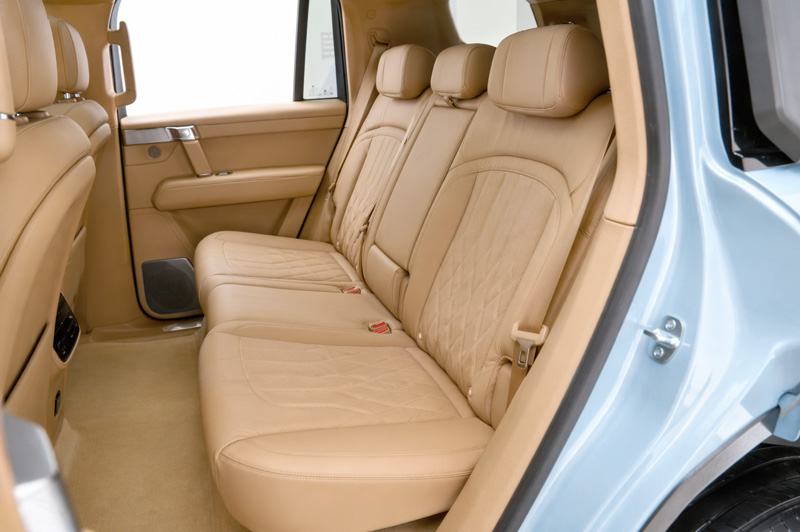
Passengers generally expect a chauffeur vehicle to be clean, well-presented, climate controlled, and prepared before pickup.
Depending on the provider and vehicle class, additional amenities may include bottled water, device charging, or connectivity. These should be confirmed rather than assumed because inclusions vary.
For a business traveller, the private cabin may provide time to make a call, check messages, or prepare for an appointment. For someone finishing a long flight, its value may simply be having a quiet space in which no further travel logistics need to be managed.
What is a chauffeur transfer to Sydney Airport like?
The airport experience also applies in the opposite direction.
For a departure, the service begins at the booked pickup address rather than at the terminal. The chauffeur arrives for the scheduled collection, assists with luggage where applicable, and transports the passenger directly to the appropriate Sydney Airport terminal.
Departure coordination focuses on getting the passenger to the correct terminal
The chauffeur should have the relevant airport and flight information so the journey is planned around the correct terminal.
The passenger still needs to choose a pickup time that provides appropriate allowance for airline check-in requirements, security, traffic conditions, and any other pre-flight procedures.
A chauffeur can coordinate the road journey, but cannot eliminate congestion or guarantee how long airport processing will take. For this reason, transfer timing should be planned with a sensible margin rather than treating the estimated driving time as the entire pre-flight allowance.
Luggage handling begins at the pickup address
For a home, hotel, or business pickup, luggage assistance can begin before the road journey starts.
This is particularly useful for travellers with multiple cases, families managing children and luggage simultaneously, older passengers, or anyone for whom moving baggage between the building and vehicle is difficult.
Once loaded, the same vehicle continues directly to the airport rather than requiring another transport connection.
What makes a chauffeur airport transfer different from an ordinary airport ride?
The main distinction is preparation and coordination rather than luxury alone.
A taxi or rideshare can also provide a clean car and a capable driver. Those services can be practical choices for passengers who prefer on-demand transport.
A chauffeur airport transfer is structured differently because key parts of the journey are normally organised in advance.
The passenger typically knows that:
-
Transport has already been reserved
-
The journey has been associated with the relevant flight or airport schedule
-
A suitable vehicle has been selected
-
The operator has the passenger's contact information
-
The meeting or pickup process has been communicated
-
The destination is already part of the booking
-
The trip is private to the passenger or travelling party
This produces a different type of convenience.
The passenger is not necessarily paying simply to travel in a higher-specification car. The practical value is that fewer transport decisions need to be made during an already time-sensitive part of the journey.
Why is communication part of the chauffeur experience?
Airport transfers involve several moving parts that can change independently.
A flight can be delayed. Baggage may take longer than expected. A passenger may leave the terminal through an unfamiliar exit. Traffic conditions can change. The chauffeur may need to use a particular airport access point.
Effective communication connects these variables.
A well-coordinated service may use:
-
Booking confirmation before travel
-
Driver or operator contact details
-
Arrival or pickup instructions
-
Updates when relevant
-
A defined method for resolving a missed connection at the meeting point
This is different from flight tracking itself.
Flight tracking tells the operator what the aircraft is doing. Communication tells the passenger what to do next.
Both contribute to the overall airport transfer experience, but they solve different problems.
What should passengers expect from a professional chauffeur?
Professional conduct is central to the service because the chauffeur is both the driver and the passenger's main human contact during the transfer.
A professional airport chauffeur should provide clear communication, courteous assistance, appropriate vehicle presentation, and driving that prioritises safety and passenger comfort.
Good service is attentive without being intrusive
Different passengers want different levels of interaction.
A business traveller may want a quiet journey with minimal conversation. A visitor unfamiliar with Sydney may appreciate clear practical information. A family may need more time for luggage, children, or boarding.
The chauffeur should be able to respond appropriately rather than applying the same interaction style to every passenger.
Professional service also includes discretion. A private transfer should feel private, especially when a passenger wants to work, make calls, rest, or simply travel without unnecessary conversation.
Professionalism also depends on the operating service
A polished driver is only one part of the experience.
Reliability also depends on the systems behind the booking, including dispatch, flight monitoring, vehicle assignment, communication, and the provider's procedures for handling changes.
Where licensing, driver accreditation, commercial passenger-transport requirements, or other regulatory obligations apply, the provider and chauffeur should operate in accordance with the relevant requirements.
Passengers who consider this important can verify the operator's credentials and service terms before travel rather than assuming that a luxury vehicle alone guarantees a professional service.
How does Sydney Airport affect the chauffeur experience?
Airport layout has a direct effect on how smooth the pickup feels.
Sydney's international and domestic terminal areas are not interchangeable, and airport access arrangements can change how chauffeurs and passengers connect.
This makes accurate flight information and terminal-specific instructions important.
A passenger who knows exactly where to meet the chauffeur has a different experience from one who receives only a generic message to call after landing.
Sydney road conditions also affect the journey once the vehicle leaves the airport.
A professional chauffeur can monitor traffic and choose an appropriate route, but cannot guarantee that congestion, incidents, roadworks, or unexpected conditions will not affect travel time.
The premium element is therefore informed route management and preparation, not a promise that Sydney traffic can always be avoided.
How do chauffeur transfers work for families and passengers with special requirements?
Families and passengers with additional travel requirements often notice the operational benefits of a pre-booked transfer more clearly because their journey involves more than finding an available car.
Families can plan the vehicle around children and luggage
A family booking may need space for passengers, suitcases, carry-on bags, a pram, and other child equipment at the same time.
Where a provider offers child or booster seats, these should normally be requested in advance so the correct equipment can be prepared.
Passengers should not assume that every chauffeur vehicle automatically carries every type of child restraint. Availability, suitability, booking requirements, and any applicable charges need to be confirmed with the provider.
Older passengers or passengers requiring additional assistance can communicate needs in advance
Pre-booking provides an opportunity to explain relevant requirements before pickup.
That may include additional boarding time, mobility considerations, extra luggage assistance, or the need for a vehicle with more practical access.
A chauffeur service is not automatically a specialist accessible-transport service, so passengers with specific accessibility requirements should confirm that the chosen vehicle and provider can meet those needs.
The benefit of advance coordination is that these questions can be resolved before the travel day rather than at the airport kerb.
What is the experience like for late-night or early-morning airport travel?
Pre-booked chauffeur transfers can be particularly useful when a flight arrives or departs outside normal daytime travel patterns.
Many Sydney airport-transfer operators offer pre-arranged services during early-morning, late-night, or overnight periods, although actual availability depends on the provider and booking.
The practical benefit is certainty of arrangement.
Instead of reaching the airport at an unusual hour and then deciding how to continue the journey, the passenger can have the transfer organised beforehand.
For an early departure, the chauffeur arrives at the nominated address at the booked time. For a late arrival, flight monitoring and predetermined meeting instructions can reduce the amount of coordination required after landing.
Advance booking is still important. A service being advertised as available around the clock does not mean every vehicle type or last-minute request will always be available.
Is chauffeur airport transfer pricing always fixed?
Pre-quoted pricing is common in chauffeur services, but the meaning of a quoted or fixed fare depends on what the provider includes.
One operator may include certain airport access charges, tolls, parking, and a defined waiting allowance in the quoted amount. Another may charge some of those items separately.
The most useful question is therefore not simply, “Is the fare fixed?”
Passengers should understand whether the quotation includes:
-
Airport access or parking charges
-
Road tolls
-
Complimentary waiting time
-
Charges for additional waiting
-
Requested child restraints
-
Additional stops
-
Changes to the original itinerary
-
Any other booked extras
Clear inclusions support one of the main advantages of a pre-arranged chauffeur transfer: knowing how the service will work before the journey begins.
Who benefits most from the chauffeur airport transfer experience?
The difference becomes most noticeable when the airport journey has more moving parts than a simple on-demand trip.
International arrivals
Passengers arriving after a long international flight may need to complete immigration, baggage reclaim, and customs or biosecurity processes before reaching the meeting point.
Having the ground transfer arranged in advance reduces the number of decisions left to make after completing those steps.
Business travellers
Business passengers may value predictable pickup arrangements, direct transport, a private cabin, and the ability to continue working or communicating during the road journey.
The main benefit is not necessarily luxury; it is reducing uncertainty around a time-sensitive transition.
Families and groups
Families and groups can plan vehicle and luggage capacity before arriving at the airport rather than attempting to solve those requirements after landing.
Where child seats, larger vehicles, or additional assistance are needed, these requirements can also be raised during booking.
Older passengers and travellers with substantial luggage
Luggage assistance, advance meeting instructions, and direct door-to-door transport can reduce the physical and logistical effort required between the terminal and destination.
Travellers on early or late flights
Advance booking can provide a clearer transport plan when the journey falls outside the hours in which a passenger would prefer to arrange transport spontaneously.
The common factor across these situations is coordination. The more complex the transition between aircraft and destination becomes, the more noticeable the value of having the ground journey organised beforehand.
What can vary between chauffeur airport transfer providers?
The overall service model may be similar, but the actual passenger experience can differ substantially between operators.
Meet-and-greet procedure
Some bookings may include a chauffeur waiting in or near the arrivals area with passenger identification, while others use a designated airport meeting point.
The passenger should rely on the instructions issued for the specific booking rather than assume every chauffeur company uses the same pickup method.
Waiting allowance
Flight monitoring and waiting time are related but separate features.
A provider may adjust chauffeur timing when an aircraft is delayed and still apply a defined waiting policy after the flight lands.
Passengers should understand both rules.
Communication process
Some providers send detailed chauffeur and vehicle information before service. Others may coordinate mainly through an operator or dispatch contact.
What matters for the passenger is knowing how to make contact if the planned meeting does not happen immediately.
Vehicle capacity
Different providers operate different fleets, and vehicles within the same broad category can have different practical luggage limits.
Passenger count alone is not enough to select the correct airport vehicle.
Special requests
Child restraints, larger vehicles, additional luggage, mobility requirements, multiple stops, or other special requests may need advance notice and may not be available for every booking.
Fare inclusions
The advertised fare structure should be read together with the provider's terms.
Airport costs, tolls, waiting, parking, extras, and itinerary changes may be handled differently by different services.
For the passenger, consistency comes from understanding these details before travel rather than assuming that every company using the word “chauffeur” provides an identical package.
A chauffeur airport transfer in Sydney should feel coordinated from the point the booking is confirmed until the passenger reaches the final destination or airport terminal.
For an arrival, that experience typically centres on flight-aware coordination, clear meeting instructions, communication with the chauffeur or operator, luggage assistance, an appropriate private vehicle, and direct transport away from the airport. For a departure, it involves a scheduled collection from the passenger's address, luggage loading, terminal-aware transport, and direct airport drop-off.
The premium value is therefore not limited to vehicle quality. It comes from removing uncertainty at several points in the airport journey: who is collecting the passenger, where they will meet, whether the luggage will fit, what happens when a flight changes, how special requirements are handled, and how the passenger reaches the next destination without arranging another stage of transport.
The exact waiting allowance, vehicle, child-seat availability, amenities, meeting procedure, operating hours, and fare inclusions still depend on the provider. A strong chauffeur airport transfer experience is one in which those details are coordinated and communicated before they become problems.
Latest Insights
- Is There a Free Bus from Sydney Domestic to International?
- Can You Walk from Domestic to International at Sydney Airport?
- How Far Apart Are Sydney Airport’s International and Domestic Terminals?
- How Long Does a Domestic to International Transfer Take at Sydney Airport?
- Is There a Free Shuttle at Sydney Airport?
- Airport Transfer With Luggage
