


Flight Delay Transfer Handling
- How flight delays affect airport transfer booking Sydney?
- How airport transfer services handle delayed flights Sydney?
- What information needed to manage flight delay airport pickup Sydney?
- What is airport transfer waiting time policy for delayed flights Sydney?
- Can airport transfer adjust pickup time after flight delay Sydney?
- What happens if you do not update flight delay for airport transfer Sydney?
- How to ensure smooth airport transfer during flight delays Sydney?
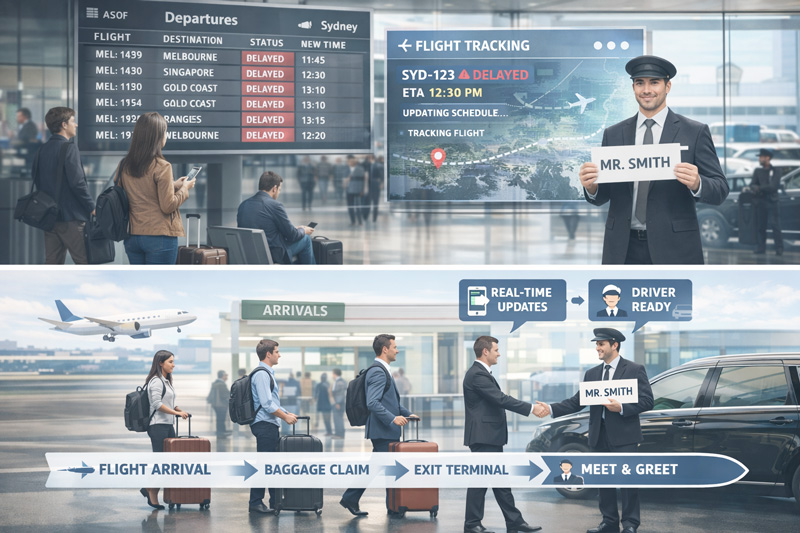
How flight delays affect airport transfer booking Sydney?
Flight delays can disrupt the entire airport transfer process, especially in a high-traffic hub like Sydney Airport. Understanding these impacts helps passengers and service providers better prepare for unexpected schedule changes.
Flight delay impact on airport pickup scheduling
Flight delays directly affect the accuracy of airport pickup schedules. When a booking is made, the driver is assigned based on the original flight arrival time. If the flight is delayed and not properly tracked, the driver may arrive too early or too late. This mismatch can lead to missed pickups, extended waiting times, or additional charges. Professional airport transfer services mitigate this by continuously monitoring flight status and adjusting schedules accordingly.
Airport transfer timing adjustment Sydney Airport
Timing adjustment is a critical component of handling delays. At Sydney Airport, where both international and domestic terminals operate with different arrival flows, transfer services must recalibrate pickup times based on updated flight information. This includes factoring in landing time, taxiing, baggage claim, and immigration clearance. Efficient services use dynamic systems to ensure the driver arrives precisely when the passenger is ready for pickup.
Driver availability during flight delays
Driver availability can be affected when delays occur, especially during peak travel periods. A delayed flight may overlap with other scheduled pickups, requiring dispatch teams to reassign drivers or adjust routes. High-quality airport transfer providers maintain flexible driver allocation systems and backup resources to handle such disruptions without compromising service reliability.
Passenger arrival uncertainty airport transfer
Flight delays introduce uncertainty into the passenger arrival process. Beyond the delayed landing time, factors such as long immigration queues, delayed baggage delivery, or terminal congestion can further extend the actual pickup time. This unpredictability requires airport transfer services to remain adaptable and maintain real-time communication with passengers.
Impact on pre booked airport transfer service
Pre-booked airport transfers are designed for convenience and precision. However, delays can challenge this structure if not managed properly. Without real-time tracking and flexible adjustment, pre-booked services may fail to deliver the expected experience. On the other hand, professional providers enhance the value of pre-booking by offering automated delay handling, ensuring that the service remains seamless regardless of schedule changes.
How airport transfer services handle delayed flights Sydney?
To maintain service quality, modern airport transfer providers in Sydney implement advanced systems and operational strategies to handle delayed flights effectively.
Real time flight tracking airport transfer
Real-time flight tracking is the foundation of delay management. Airport transfer companies integrate with global flight tracking systems to monitor flight status continuously. This allows them to detect delays, early arrivals, or gate changes instantly, ensuring that pickup arrangements remain accurate without requiring manual updates from passengers.
Automatic pickup time adjustment system
Once a delay is detected, automated systems update the pickup time based on the revised arrival schedule. These systems consider multiple variables, including estimated landing time and average processing time at Sydney Airport. Automation reduces human error and ensures that adjustments are made quickly and efficiently.
Driver dispatch coordination Sydney Airport
Behind the scenes, dispatch teams coordinate with drivers to reflect updated schedules. If a delay affects multiple bookings, dispatchers may reassign drivers, optimize routes, or adjust waiting positions within the airport. This coordination is essential to maintain punctuality and avoid congestion at designated pickup points.
Meet and greet adjustment for delayed arrivals
Meet and greet services, where drivers wait inside the terminal with signage, are also adjusted based on flight delays. Drivers are instructed to enter the terminal at the appropriate time, ensuring that passengers are welcomed without unnecessary waiting. This enhances the customer experience, especially for international travelers.
Communication between driver and passenger
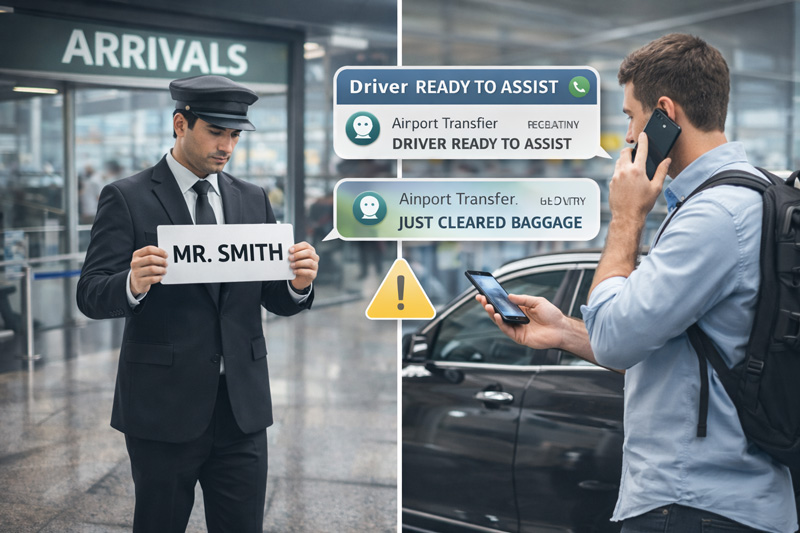
Effective communication is key to managing delays. Passengers typically receive updates via SMS, email, or messaging apps, including driver details and revised pickup times. Drivers may also contact passengers directly once they land. This two-way communication ensures clarity, reduces confusion, and helps both parties coordinate smoothly despite any disruptions.
What information needed to manage flight delay airport pickup Sydney?
Accurate and complete information is essential for airport transfer providers to handle flight delays effectively. The more precise the data, the better the system can adapt to real-time changes and ensure a smooth pickup experience.
Flight number for tracking airport transfer
The flight number is the most critical piece of information. It allows the transfer service to monitor the flight in real time, detect delays, and adjust pickup timing automatically. Without the correct flight number, the system cannot track schedule changes accurately, increasing the risk of misaligned pickups.
Arrival time update Sydney Airport
While the system tracks flights automatically, updated arrival time information still plays an important role. It helps confirm expected landing times and allows dispatch teams to cross-check real-time data. This is particularly useful in cases where flights experience multiple delays or schedule changes.
Passenger contact information airport pickup
Providing a valid phone number or messaging contact ensures seamless communication between the passenger and the driver. In case of unexpected delays, terminal changes, or pickup adjustments, direct communication helps avoid confusion and ensures that both parties stay aligned.
Pickup location at terminal Sydney Airport
Sydney Airport has multiple terminals, including international and domestic terminals with different pickup procedures. Specifying the correct terminal and meeting point allows the driver to position themselves accurately, reducing waiting time and improving efficiency.
Special request handling airport transfer
Special requirements such as extra luggage, child seats, wheelchair assistance, or VIP service must be communicated in advance. During flight delays, these requests may require additional preparation time, so early notification ensures the service can accommodate all needs without disruption.
What is airport transfer waiting time policy for delayed flights Sydney?
Waiting time policies define how long a driver will wait after a flight arrives and what charges may apply if delays extend beyond the allowed period. Understanding these policies helps passengers avoid unexpected costs.
Free waiting time airport transfer Sydney
Most airport transfer services in Sydney offer a free waiting period after the flight lands. This typically ranges from 30 to 60 minutes, allowing passengers enough time to clear immigration, collect baggage, and reach the pickup point. Premium services may offer extended waiting times as part of their package.
Extra waiting charges airport pickup
If the waiting time exceeds the free allowance, additional charges may apply. These fees are usually calculated per minute or per block of time. Transparent pricing policies ensure that passengers are aware of potential extra costs in advance.
Chauffeur waiting policy Sydney Airport
Chauffeur services often provide more flexible waiting policies compared to standard transfers. They may include longer complimentary waiting times and personalized service, such as monitoring passenger progress inside the terminal and adjusting accordingly.
International vs domestic waiting time rules
Waiting time policies often differ between international and domestic flights. International arrivals typically include longer free waiting periods due to immigration and customs procedures, while domestic pickups may have shorter waiting windows.
No show and late arrival policy
If a passenger fails to appear at the designated pickup point without updating the service provider, the booking may be marked as a no-show. This can result in full charges or cancellation fees. Similarly, significant delays without communication may lead to service disruption, requiring rebooking.
Can airport transfer adjust pickup time after flight delay Sydney?
Airport transfer services in Sydney are designed to be flexible, especially when dealing with unpredictable flight delays. The ability to adjust pickup time is a key feature that ensures a seamless travel experience.
Rescheduling airport transfer booking
Most airport transfer providers allow passengers to reschedule their booking when a flight delay occurs. This can be done through an online platform, mobile app, or direct contact with customer support. Flexible rescheduling policies help maintain service continuity without additional stress for travelers.
Flexible pickup time coordination Sydney
Advanced transfer services coordinate pickup times dynamically based on real-time flight updates. Instead of relying on fixed schedules, they adapt to changes instantly, ensuring the driver arrives when the passenger is actually ready.
Real time delay updates and driver response
Drivers receive continuous updates about flight status through dispatch systems. This allows them to adjust their arrival time, wait at appropriate locations, or reposition within the airport as needed. Real-time responsiveness is essential for maintaining punctuality.
Handling early arrival vs late arrival
Airport transfer systems are designed to handle both early and delayed arrivals. If a flight arrives earlier than expected, the system can notify drivers to adjust accordingly. Similarly, delays trigger automatic rescheduling to prevent missed pickups.
System automation vs manual adjustment
Modern airport transfer services rely heavily on automation to handle delays efficiently. Automated systems reduce human error and speed up response times. However, manual intervention by dispatch teams is still important in complex situations, ensuring that every booking is handled correctly.
What happens if you do not update flight delay for airport transfer Sydney?
Failing to update flight delay information can lead to several service issues, affecting both the passenger and the provider.
Driver waiting without updated flight information
If the driver is not informed of a delay, they may arrive based on the original schedule. This can result in unnecessary waiting time or the driver leaving before the passenger arrives.
Risk of no show airport transfer booking
Without updated information, the system may classify the booking as a no-show if the passenger does not appear at the expected time. This can lead to cancellation and additional fees.
Additional charges due to delay miscommunication
Miscommunication about delays can result in extra waiting charges or rebooking fees. These costs can often be avoided by providing accurate and timely updates.
Passenger inconvenience and rebooking process
Passengers may face inconvenience if the original transfer is missed. Rebooking another service at the last minute can be time-consuming and more expensive, especially during peak hours.
Service disruption airport pickup Sydney
Overall service quality is compromised when delay information is not communicated. Proper coordination breaks down, leading to delays, confusion, and a less efficient pickup process.
How to ensure smooth airport transfer during flight delays Sydney?
Proper planning and choosing the right service provider can significantly reduce the impact of flight delays on airport transfers.
Provide accurate flight details airport transfer
Always enter the correct flight number and details when booking. This enables the service provider to track your flight and adjust pickup timing automatically.
Choose service with flight tracking system
Select airport transfer companies that offer real-time flight tracking. This feature is essential for handling delays without requiring constant manual updates.
Confirm driver communication before arrival
Ensure that you receive driver contact details before your arrival. Direct communication helps resolve any last-minute issues quickly and efficiently.
Check waiting time policy in advance
Understanding the waiting time policy helps you avoid unexpected charges. Knowing how long the driver will wait allows you to plan your arrival accordingly.
Select reliable airport transfer provider
Choose a reputable provider with proven experience in handling airport transfers. Reliable services offer better coordination, professional drivers, and strong support systems.
Conclusion
Flight delays are unavoidable, but they do not have to disrupt your airport transfer experience in Sydney. With the right preparation and a reliable service provider, delays can be managed efficiently through real-time flight tracking, flexible scheduling, and clear communication. By providing accurate booking information, understanding waiting time policies, and choosing a professional airport transfer service, you can ensure a seamless pickup process regardless of any changes to your flight schedule.
Q&A about Flight Delay Transfer Handling
Will airport transfer wait if flight delayed Sydney?
Yes, most professional airport transfer services track flight delays and adjust pickup times automatically. Drivers will typically wait within the free waiting time policy.
Do drivers track flight delays automatically?
Yes, modern airport transfer systems include real-time flight tracking, allowing drivers and dispatch teams to monitor delays and respond accordingly.
How long will driver wait at Sydney Airport?
The waiting time usually ranges from 30 to 60 minutes after the flight lands, depending on the service provider and whether the flight is domestic or international.
Can I change pickup time after booking?
Yes, most providers allow changes to pickup time, especially in cases of flight delays. This can be done through customer support or booking management systems.
What if my flight is delayed overnight?
If your flight is delayed overnight, you should contact the transfer provider as soon as possible. They will help reschedule your booking or provide alternative arrangements based on availability.
Latest Insights
- Is There a Free Bus from Sydney Domestic to International?
- Can You Walk from Domestic to International at Sydney Airport?
- How Far Apart Are Sydney Airport’s International and Domestic Terminals?
- How Long Does a Domestic to International Transfer Take at Sydney Airport?
- Is There a Free Shuttle at Sydney Airport?
- Airport Transfer With Luggage
