


How Airport Drop Off Works
- How airport drop off works in Sydney step by step?
- Where to drop off passengers at Sydney Airport terminals?
- How airport transfer drop off works in Sydney?
- What rules apply for airport drop off in Sydney?
- Common problems during airport drop off Sydney
- How to ensure smooth airport drop off experience Sydney?

How airport drop off works in Sydney step by step?
Arrival at airport entrance and traffic flow
When approaching Sydney Airport, vehicles enter a controlled road network designed to separate arrivals, departures, and service traffic. Clear overhead signage directs drivers toward departure drop off zones for each terminal. Traffic flow is typically one-way, ensuring continuous movement and reducing congestion. During peak hours, traffic may slow down, so allowing extra time is essential to avoid last-minute stress.
Identifying correct terminal before drop off
Sydney Airport has separate terminals for domestic and international flights. Before arriving, passengers must confirm their airline and terminal (T1 International, T2 or T3 Domestic). Choosing the wrong terminal can result in delays and unnecessary re-routing. Most airlines clearly indicate terminal details on tickets, and navigation apps also provide terminal-specific directions.
Entering designated drop off zones
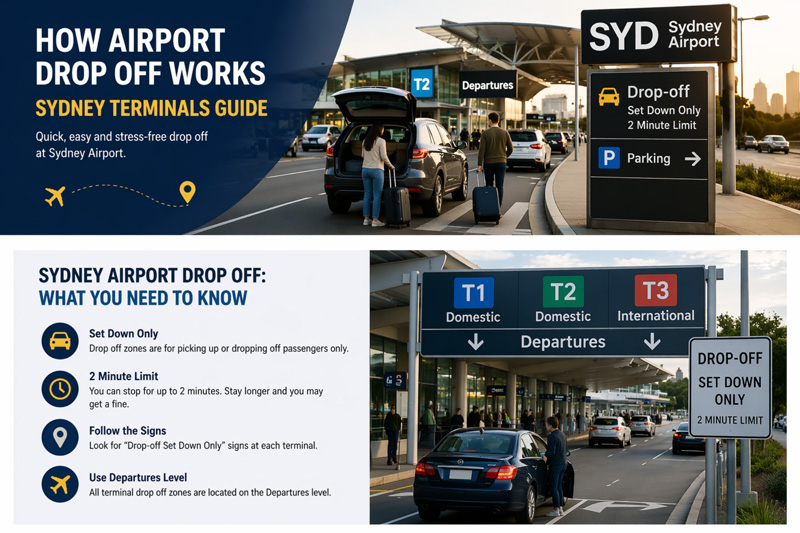
Each terminal has clearly marked curbside drop off areas located directly outside departure halls. Drivers must follow lane markings and signage to enter these zones. These areas are strictly for quick drop off only, meaning vehicles must not stop for extended periods. Airport staff may be present to manage traffic and ensure vehicles keep moving efficiently.
Passenger exit and luggage unloading process
Once the vehicle stops at the curbside, passengers should exit quickly while unloading luggage. To maintain traffic flow, it is recommended that travelers prepare belongings in advance. Drivers may assist briefly with luggage, but prolonged stopping is not allowed. Trolleys are usually available near the entrance for convenience.
Vehicle exit and traffic regulations
After passengers have been dropped off, drivers must immediately exit the drop off zone by following designated exit routes. Sydney Airport enforces strict no waiting and no parking rules in these areas. Vehicles that remain too long risk fines or enforcement actions. The entire process is designed to be efficient, typically lasting only a few minutes.
Where to drop off passengers at Sydney Airport terminals?
Domestic terminal drop off locations
Sydney Airport domestic terminals (T2 and T3) provide curbside drop off areas directly outside the departure entrances. These zones are easily accessible via airport roads and are clearly marked with signage. They are designed for fast passenger drop off, making them ideal for travelers with minimal luggage or those already prepared for check-in.
International terminal drop off zones
At Terminal 1 (International), drop off zones are located at the departure level outside the main terminal building. Due to higher passenger volume and security measures, traffic here can be busier. Drivers should follow signs for “Departures” and stay alert to lane instructions. Staff may assist in directing vehicles during peak travel times.
Curbside drop off area rules and limits
Curbside drop off areas at Sydney Airport operate under strict rules:
- No parking or waiting is allowed
- Drop off must be completed quickly
- Drivers must remain with their vehicles
- Traffic must keep moving at all times
Failure to follow these rules can result in fines or being asked to move by airport staff.
Express drop off vs parking options
For quick drop offs, curbside zones are the most convenient. However, if more time is needed (for example, assisting elderly passengers or handling large luggage), drivers should use short-term parking areas instead. Some terminals also offer express drop off zones with limited free time, after which charges may apply.
Signage and navigation inside airport roads
Sydney Airport provides extensive signage throughout its road network. Overhead signs indicate terminals, drop off lanes, and exits. Navigation apps such as Google Maps also integrate airport routing, helping drivers reach the correct location efficiently. Following signage carefully is crucial, especially for first-time visitors, to avoid entering incorrect lanes or missing the drop off area.
How airport transfer drop off works in Sydney?
Private airport transfer drop off process
Private airport transfer services in Sydney follow a structured and pre-arranged drop off process. The journey is typically booked in advance, with details such as pickup location, passenger count, luggage requirements, and flight information provided beforehand. On the day of travel, the driver arrives at the scheduled location, transports passengers directly to the correct terminal, and drops them off at the designated departure zone. This door-to-door service eliminates uncertainty and ensures a smooth transition from origin to airport.
Chauffeur service drop off experience
Chauffeur airport transfer offers a premium drop off experience focused on comfort, professionalism, and efficiency. Drivers are usually well-trained, dressed professionally, and operate high-end vehicles such as executive sedans or luxury SUVs. The drop off process is seamless, with careful attention to timing, passenger comfort, and minimal disruption. Chauffeurs often assist with luggage and ensure passengers are dropped off at the most convenient terminal entrance.
Driver coordination before arrival
Before reaching the airport, effective coordination between driver and passenger is essential. This may include confirming pickup time, verifying terminal details, and checking traffic conditions. Many airport transfer services also monitor real-time traffic and adjust routes accordingly. Clear communication helps avoid delays, incorrect terminal drop offs, or last-minute confusion, especially during busy travel periods.
Luggage handling and passenger assistance
One key advantage of airport transfer services is the assistance provided with luggage. Drivers typically help load and unload bags, ensuring they are handled safely and efficiently. This is particularly beneficial for families, elderly passengers, or travelers with large or multiple pieces of luggage. The goal is to make the drop off process as convenient and stress-free as possible.
Differences between transfer and self drop off
Airport transfer drop off differs significantly from self drop off. With private transfers, the entire process is planned, coordinated, and executed professionally, reducing the risk of errors. In contrast, self drop off requires the driver to navigate airport roads, identify the correct terminal, and manage time independently. Transfers offer higher reliability, convenience, and support, while self drop off may be more flexible but requires more effort and familiarity with airport procedures.
What rules apply for airport drop off in Sydney?
Time limits at drop off zones
Sydney Airport enforces strict time limits at curbside drop off zones. These areas are designed for quick passenger drop off only, typically allowing just a few minutes for stopping. Drivers must complete unloading promptly to maintain traffic flow. Staying beyond the permitted time can lead to enforcement actions or fines.
No parking and waiting restrictions
Parking and waiting are strictly prohibited in drop off zones. Drivers are not allowed to leave their vehicles unattended or wait for passengers who are not ready. If additional time is needed, such as assisting passengers or organizing luggage, designated parking areas must be used instead. These rules are in place to prevent congestion and ensure smooth operation.
Traffic fines and enforcement policies
Sydney Airport actively enforces traffic regulations through monitoring systems and on-site staff. Vehicles that violate drop off rules—such as stopping too long, parking illegally, or blocking traffic—may receive fines. Enforcement may include cameras, patrol officers, or automated systems. Understanding and following the rules helps avoid unnecessary penalties.
Security and safety considerations
Security is a key priority at airport drop off zones. Vehicles must not be left unattended, and any suspicious activity is taken seriously. The controlled environment ensures passenger safety while maintaining efficient operations. Drivers and passengers are expected to follow all instructions from airport staff and signage.
Peak hour congestion and restrictions
During peak travel times, such as early mornings, evenings, and holiday periods, drop off areas can become congested. Traffic restrictions may be more strictly enforced, and delays are more likely. Planning ahead, allowing extra travel time, and coordinating effectively can help minimize disruptions during these busy periods.
Common problems during airport drop off Sydney
Choosing wrong terminal location
One of the most common issues is arriving at the wrong terminal. Sydney Airport operates separate terminals for domestic and international flights, and confusion between them can cause significant delays. This often happens when passengers do not double-check airline information or rely on outdated details. Being dropped off at the wrong terminal may require additional travel time, re-entry into airport traffic, and increased stress before departure.
Traffic congestion and delays
Traffic congestion is a frequent problem, especially during peak hours such as early mornings, late afternoons, and holiday periods. Airport access roads can become crowded, slowing down vehicles and increasing the risk of missing check-in deadlines. Unexpected road conditions, construction, or accidents can further impact travel time, making it essential to plan ahead.
Miscommunication between driver and passenger
Miscommunication can lead to incorrect drop off points, timing issues, or confusion about terminal locations. This is particularly common when details are not clearly confirmed before the trip. For example, passengers may provide incomplete flight information, or drivers may misunderstand instructions. Clear communication is critical to avoid last-minute problems.
Luggage unloading delays
Delays during luggage unloading can disrupt the flow of traffic in drop off zones. Passengers who are not prepared may take longer to exit the vehicle, especially when traveling with multiple bags or oversized items. Since stopping time is limited, any delay can create pressure and increase the risk of violating airport rules.
Unexpected fines or restrictions
Many drivers are unaware of the strict regulations governing airport drop off areas. Staying too long, leaving a vehicle unattended, or stopping in unauthorized zones can result in fines. These penalties can occur quickly due to active monitoring systems, making it important to understand and follow all rules.
How to ensure smooth airport drop off experience Sydney?
Providing correct terminal and timing
To ensure a smooth drop off, passengers should provide accurate flight details, including airline, terminal, and departure time. This allows drivers to plan the route correctly and arrive at the appropriate location. Confirming these details in advance helps eliminate confusion and reduces the risk of being dropped off at the wrong terminal.
Planning route and arrival time
Proper planning is essential for a stress-free experience. Drivers should check traffic conditions, estimate travel time, and allow a buffer for unexpected delays. Arriving too early may cause unnecessary waiting, while arriving too late can create pressure and increase the chance of missing a flight. Using navigation tools can help optimize the route.
Communicating clearly with driver
Clear and timely communication between driver and passenger is key. This includes confirming pickup time, terminal location, and any special requirements such as luggage assistance. For airport transfer services, communication may also involve real-time updates to adjust for traffic or schedule changes.
Preparing luggage in advance
Passengers should organize and prepare their luggage before arriving at the airport. This ensures a quick and efficient unloading process, minimizing time spent in the drop off zone. Having bags ready to exit immediately helps maintain traffic flow and avoids unnecessary delays.
Following airport signs and instructions
Sydney Airport provides clear signage and directions throughout its road network. Following these instructions helps drivers reach the correct drop off area efficiently. Ignoring signs or entering the wrong lane can lead to confusion, delays, or even fines. Staying attentive to road markings and guidance is essential for a smooth experience.
Conclusion
Understanding how airport drop off works in Sydney is essential for a smooth and stress-free departure experience. From choosing the correct terminal and following traffic flow to complying with strict drop off rules, every step plays a role in avoiding delays and penalties. Whether using a private transfer service or self drop off, proper planning, clear communication, and awareness of airport procedures will ensure efficiency and convenience. By preparing in advance and following airport guidelines, travelers and drivers can complete the drop off process quickly, safely, and without unnecessary complications.
Latest Insights
- Is There a Free Bus from Sydney Domestic to International?
- Can You Walk from Domestic to International at Sydney Airport?
- How Far Apart Are Sydney Airport’s International and Domestic Terminals?
- How Long Does a Domestic to International Transfer Take at Sydney Airport?
- Is There a Free Shuttle at Sydney Airport?
- Airport Transfer With Luggage
