


How Many Terminals Does Sydney Airport Have?
- Sydney Airport terminals at a glance
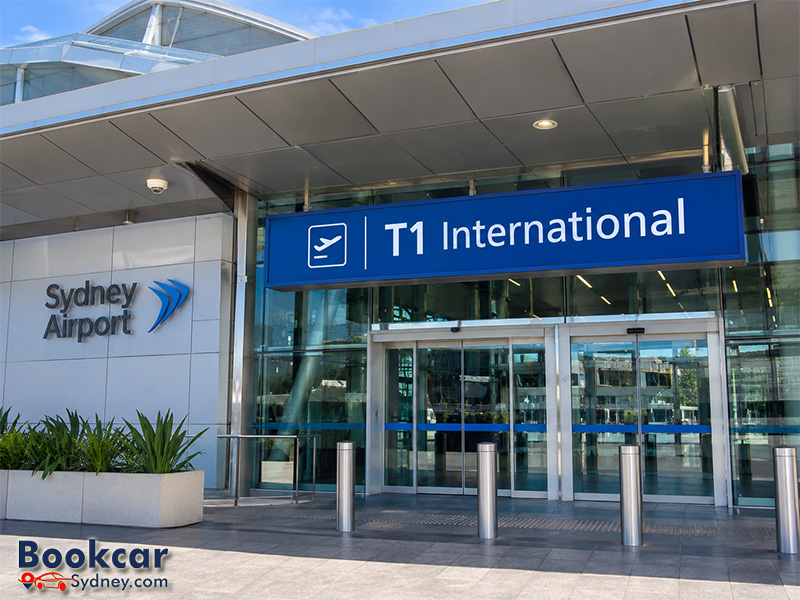
- T1 International: flights to and from overseas
- T2 Domestic: Jetstar, Virgin Australia, Rex and FlyPelican
- T3 Domestic: Qantas domestic flights
- How to confirm your terminal before travelling
- How to get between T1, T2 and T3
- What if your journey connects an international and a domestic flight?
Sydney Airport terminals at a glance
The simplest way to identify the right terminal is to match your flight type and operating airline with the terminal shown on your booking or boarding pass.
|
Terminal |
Main use |
Airlines and flights |
|
T1 International |
International arrivals and departures |
All airlines operating international services at Sydney Airport, including Qantas international flights |
|
T2 Domestic |
Domestic arrivals and departures |
Jetstar, Virgin Australia, Rex and FlyPelican domestic services |
|
T3 Domestic |
Domestic arrivals and departures |
Qantas domestic services |
There is an important recent change: since 4 November 2026, Rex and FlyPelican flights have arrived and departed from T2 rather than T3. Older airport guides may still show the previous arrangement. Check your own flight details before setting off.
T1 International: flights to and from overseas
Terminal 1 is Sydney Airport’s international terminal. All international flights arriving at or departing from Sydney Airport use T1, regardless of whether the airline also operates Australian domestic routes.
For an international departure, you generally check in or drop your baggage at T1, pass through security screening and complete the required departure passport-control process before reaching the international gates. For an international arrival, you follow arrival and passport-control procedures, collect checked baggage where applicable, and complete customs and biosecurity checks before exiting into the arrivals hall.
A common source of confusion is Qantas: its international services use T1, while its domestic services use T3. Do not choose T3 merely because the flight is operated by Qantas.
If you are collecting a traveller arriving from overseas, follow directions to T1 International Arrivals. If you are dropping someone off for an overseas flight, use T1 International Departures.
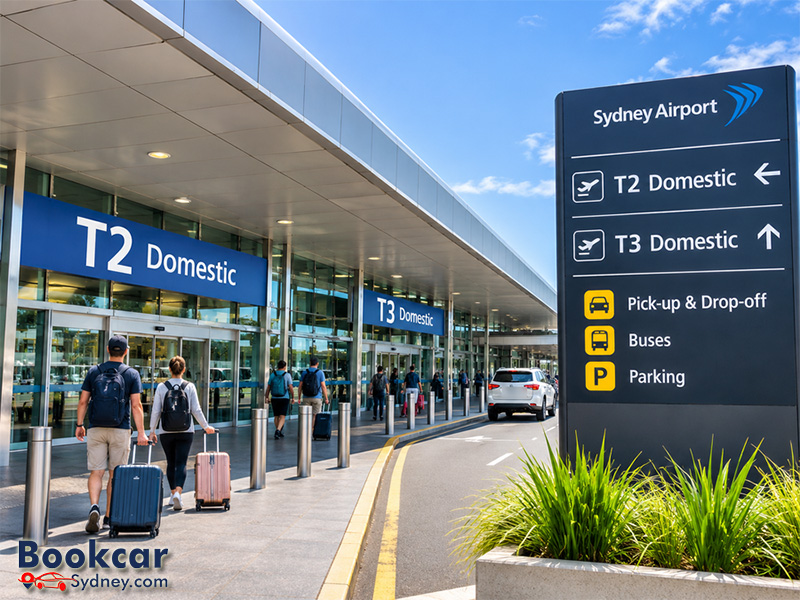
T2 Domestic: Jetstar, Virgin Australia, Rex and FlyPelican
Terminal 2 serves domestic flights operated by Jetstar, Virgin Australia, Rex and FlyPelican. Passengers using these services normally check in, pass through domestic security screening and board from T2.
The relocation of Rex and FlyPelican to T2 took effect on 4 November 2026. This matters particularly for passengers travelling on regional services or arranging a pick-up, because older instructions referring to T3 may now lead them to the wrong terminal.
T2 is also undergoing upgrades, so some check-in and security arrangements may change while work continues. Follow the terminal signs and the latest instructions provided by your airline.
T3 Domestic: Qantas domestic flights
Terminal 3 serves Qantas domestic flights within Australia. Qantas passengers flying from Sydney to another Australian destination should check their flight details for T3, while those travelling internationally should head to T1.
The distinction is based on the actual flight and terminal, not simply on the airline name. If your itinerary includes a codeshare, connecting service or more than one airline, rely on the operating flight details and the terminal printed on your booking or boarding pass.
How to confirm your terminal before travelling
Although the three-terminal layout is straightforward, terminal assignments can change. These checks help prevent a last-minute detour:
- Check the terminal field in your airline confirmation, booking management page or boarding pass.
- Confirm whether your flight is domestic or international, especially when flying with an airline such as Qantas that uses different terminals for each type of service.
- If your ticket is a codeshare, check which airline actually operates the flight and confirm the terminal against that flight’s details.
- Look up your flight number on Sydney Airport’s current flight information and follow the wayfinding signs once you arrive.
- Tell anyone collecting or dropping you off the precise terminal—T1, T2 or T3—rather than saying only “Sydney Airport”.
When in doubt, use the terminal information for your specific flight rather than an old airline-by-terminal list.
How to get between T1, T2 and T3
T2 and T3 are in the domestic terminal precinct, while T1 is in a separate international precinct. The route depends on which terminals you need to connect.
Walking between T2 and T3
You can walk between the two domestic terminals using the pedestrian route through the P1 car park. Sydney Airport estimates the walk at approximately five minutes. Allow extra time if you have heavy luggage or need assistance.
Transferring between T1 and the domestic terminals
You cannot walk between T1 International and T2/T3 Domestic. Sydney Airport provides a complimentary Terminal Transfer Bus between the precincts. It runs approximately every 15 minutes from 5:30 am to 10:30 pm, and the bus journey takes about 10 minutes. The shuttle stops outside the arrivals areas of the respective terminals.
An airport train also runs between International Airport and Domestic Airport stations, with a journey of about two minutes between the stations. Unlike the complimentary shuttle, the train is a paid option. Taxis and rideshare services are other alternatives, subject to availability and pick-up arrangements.
The time spent on a shuttle or train is only part of the connection. You may also need to collect baggage, move to the next check-in area, clear security and, when travelling internationally, complete border formalities.
What if your journey connects an international and a domestic flight?
If you arrive from overseas and then fly to another Australian city, expect to transfer from T1 to the domestic terminal used by your onward flight. If you begin with a domestic flight and then leave Australia, you will normally transfer in the other direction, from T2 or T3 to T1.
Before travelling, ask your airline whether your bags will be checked through, where you must collect or recheck them, and which transfer arrangements apply to your booking. A single ticket, separate tickets and different operating airlines can involve different processes. Leave enough connection time for terminal travel and the required airport formalities.
