


Where to Store Luggage at Sydney Airport
- Where are the luggage storage locations at Sydney Airport?
- T1 International: staffed luggage storage
- T1, T2 and T3: 24-hour self-service lockers
- How much does luggage storage cost?
- How do you store and retrieve your bags?
- Which storage option is right for your trip?
- Can international transit passengers use luggage storage?
- What should you check before leaving your luggage?
Where are the luggage storage locations at Sydney Airport?
Secure Travel lists storage options at the international terminal (T1) and both domestic terminals (T2 and T3). The staffed service and the lockers are separate facilities, so check the correct location before heading to the airport.
|
Service |
Where to find it |
Advertised access |
|
T1 International — staffed counter |
Ground-floor public area, next to the meeting point |
6 am–10 pm daily |
|
T1 International — lockers |
Level 2 of the international car park, near the pedestrian bridge |
24 hours |
|
T2 Domestic — lockers |
Ground floor of the P1 car park, about 30 m from T2 arrivals |
24 hours |
|
T3 Domestic — lockers |
Ground-floor Qantas arrivals area, next to Qantas Group Check-in |
24 hours |
Locations and operating hours can change. Check the operator’s terminal-specific listings before travelling, particularly if you are collecting bags late in the evening.
T1 International: staffed luggage storage
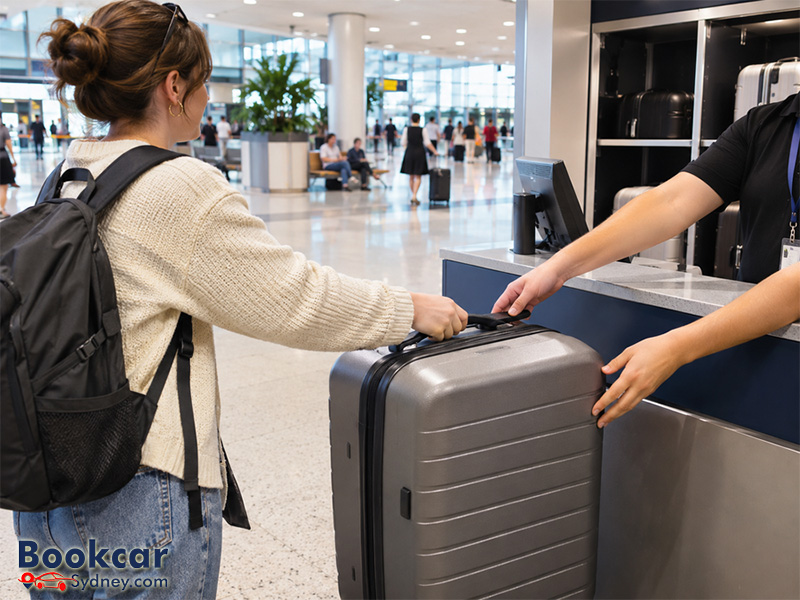
At T1, Secure Travel’s staffed luggage storage is on the ground floor in the public terminal area, beside the meeting point. The operator currently lists opening hours of 6 am to 10 pm. This is the useful option when you have a suitcase, several bags or an awkwardly shaped item that may not fit into a locker. See current T1 locations and hours for updates.
The luggage storage counter is different from Secure Travel’s baggage-wrapping kiosks near international check-in counters D and H on the departures level. Wrapping protects a bag for travel; it is not a service for leaving the bag behind.
For staffed storage, select your dates and item type through the operator’s booking service to see the applicable charge. Bring identification and be prepared for security screening of your items. Store nothing prohibited, and plan to return before the counter closes.
T1, T2 and T3: 24-hour self-service lockers
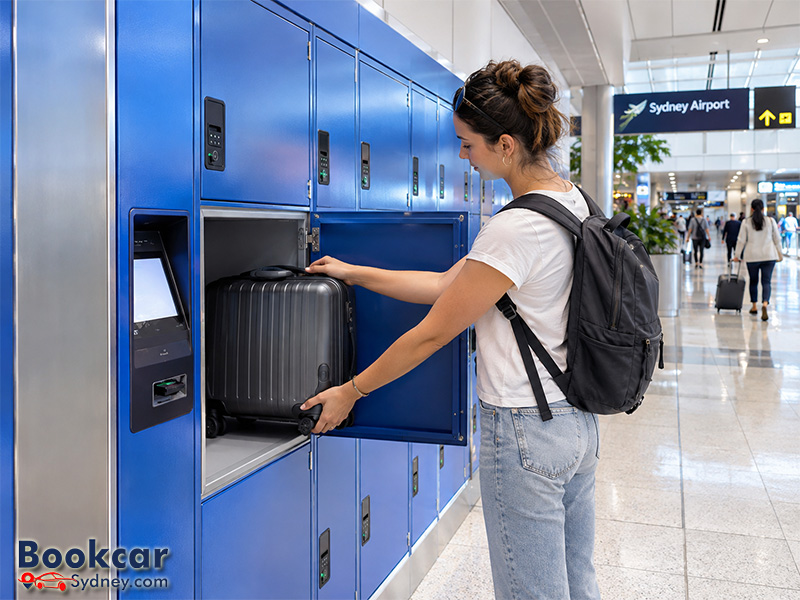
Secure Travel also lists automated lockers for travellers who prefer to store and collect their belongings without a staffed counter. The operator advertises 24-hour access and card or tap-and-go payment, but the location varies by terminal.
International Terminal T1 lockers
The T1 lockers are on Level 2 of the international car park, near the pedestrian bridge to the terminal. Follow the international car-park access route rather than looking for lockers at the staffed arrivals counter.
Domestic Terminal T2 lockers
At T2, the lockers are on the ground floor of the P1 domestic car park, approximately 30 metres from the main T2 arrivals entrance. This makes them a practical choice if you need to leave a small suitcase before heading into Sydney or between domestic flights.
Domestic Terminal T3 lockers
The T3 lockers are listed on the ground floor in the Qantas arrivals area, beside Qantas Group Check-in. Follow the terminal’s ground-floor signs and confirm the precise location on the operator’s directions if you are unfamiliar with T3.
Although the lockers are advertised as accessible around the clock, that does not mean passenger check-in, screening areas or every terminal entrance is open overnight. Plan your route back to the locker separately from your flight access arrangements.
How much does luggage storage cost?
For the self-service lockers at Sydney Airport, Secure Travel currently publishes the following rates in Australian dollars, charged per locker for each 24-hour period:
|
Locker size |
Internal dimensions (H × W × D) |
Price per 24 hours |
|
Small |
120 × 410 × 550 mm |
A$10 |
|
Medium |
580 × 410 × 600 mm |
A$16 |
|
Large |
890 × 410 × 600 mm |
A$20 |
The “small” locker has a height of only 120 mm, so it is suited to flatter items rather than an upright cabin suitcase. Measure your entire bag, including wheels, handles and anything attached to the outside, before choosing a compartment. A bag must fit inside the listed dimensions, regardless of whether an airline calls it cabin or checked luggage.
Staffed T1 storage uses a separate booking quote based on your bag or other item and the requested storage period. Do not treat locker prices as staffed-counter rates. Prices may be updated, and availability of a particular locker size is not guaranteed.
For current locker dimensions and rates, use the T2 locker pricing page (select another terminal to confirm its location).
How do you store and retrieve your bags?
Using a staffed storage counter
- Go to the T1 staffed luggage storage location with your bags and acceptable identification.
- Confirm the storage period, item category, price and any security requirements with the operator.
- Complete the check-in and payment process, and keep your receipt or booking reference.
- Return during the counter’s trading hours with the identification and collection details required by the operator.
Using a self-service locker
- At the locker terminal, choose Deposit and enter the required details.
- Select a compartment that fits all your belongings, then choose the storage duration.
- Set your PIN and pay with a card or tap-and-go. Place the bags inside and securely close the door.
- Keep your receipt and PIN. To collect your items, select Retrieve, enter your PIN and remove everything from the locker.
If you lose your receipt or PIN or expect to exceed the paid storage period, contact the storage operator for assistance rather than assuming you can retrieve the bag in the usual way.
Which storage option is right for your trip?
- Choose staffed storage at T1 if you have oversized luggage or want to discuss what the operator can accept. You must be able to collect your bag before 10 pm.
- Choose the T1 lockers if you are returning to the international precinct at an hour outside the staffed counter’s opening times and your bags fit the locker dimensions.
- Choose the T2 or T3 lockers if you are travelling through the domestic precinct and want to avoid moving your bags across the airport just to store them.
- If you are heading into the city and will not return to the airport, compare storage near your final departure point rather than paying for an extra journey back to collect your luggage.
T1 is separate from the T2/T3 domestic precinct. Transferring between them takes additional time and may involve a shuttle, train or other transport. Allow for both journeys if you choose storage in a different terminal area.
See Sydney Airport’s terminal transfer information for current connections.
Can international transit passengers use luggage storage?
The advertised storage locations are in public terminal or car-park areas, not inside the international airside transit lounge. If you are connecting through Sydney without entering Australia, you cannot assume that you may leave the transit area to use them.
Whether you can pass immigration depends on your passport, visa status and connection. Australian Home Affairs states that travellers using transit-without-a-visa arrangements must not leave the transit lounge. Check your entry requirements and airline transfer instructions before booking storage for an international connection.
Read the Australian Government’s transit eligibility guidance if this applies to your journey.
What should you check before leaving your luggage?
- Keep passports, travel documents, essential medication, valuables and anything you may need before your next flight with you.
- Check the operator’s prohibited-items conditions and any inspection requirements before leaving a bag.
- Confirm the correct terminal, pickup point, locker size and payment method before you travel.
- Save the locker PIN or staffed-storage receipt somewhere accessible without the stored bag.
- Build in enough time to collect your luggage, travel to the departure terminal and complete airline check-in and security procedures.
