


How to Transfer from Sydney Domestic to the International Terminal
- Which terminals do you need to travel between?
- Take the free Terminal Transfer Bus from T2 or T3 to T1
- Take the Airport Link train for a short rail transfer
- Use the Qantas transfer bus from T3 if you are eligible
- Transfer from Virgin Australia or another domestic airline at T2
- Other ways to get from Domestic to International
- Check your baggage, boarding pass and international departure requirements
- How much time should you allow for the transfer?
- Conclusion
Which terminals do you need to travel between?
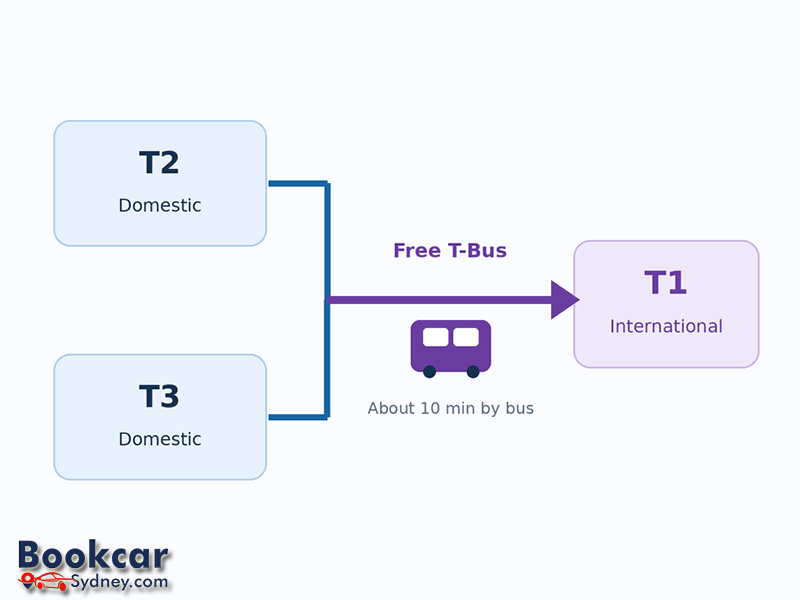
Sydney Airport has two domestic terminals, T2 and T3, and one international terminal, T1. Most passengers arriving on a domestic flight need to reach T1 to depart on an international flight. T2 and T3 are next to each other, but T1 is on a separate part of the airport, so you cannot walk from the domestic precinct to the international terminal.
Your best transfer depends on the airline you arrived with, whether your baggage is checked through and the time of your next departure. The options below are for a domestic-to-international journey, not the reverse.
|
Transfer option |
Journey time |
Cost or eligibility |
|
Terminal Transfer Bus |
About 10 minutes on the bus |
Free; usually every 15 minutes |
|
Airport Link train |
About 2 minutes on the train |
Paid fare; station access and walking add time |
|
Qantas transfer bus |
About 15 minutes on the bus |
Eligible Qantas domestic-to-international connections |
|
Taxi or rideshare |
Varies with road conditions |
Paid; arranged outside the domestic terminal |
Take the free Terminal Transfer Bus from T2 or T3 to T1
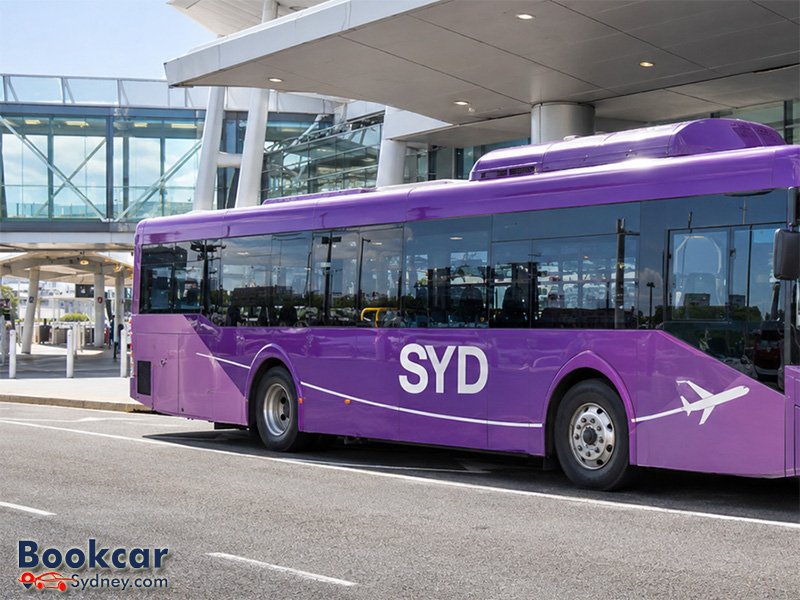
For most passengers, the easiest way to travel from Sydney domestic to international is the airport-operated Terminal Transfer Bus, also called the T-Bus. It runs between T2/T3 Domestic and T1 International, with no fare or advance booking required.
- After your domestic flight arrives, make your way to the Arrivals level. If you need to collect checked baggage, do so before leaving the terminal.
- Exit T2 or T3 and follow the airport signs for the Terminal Transfer Bus. The pick-up area is outside each domestic terminal on the Arrivals level.
- Board the bus bound for T1 International. The bus ride takes approximately 10 minutes.
- At T1, enter the international terminal and follow signs to airline check-in or departures, depending on whether you already have your boarding pass and checked-through baggage.
Sydney Airport lists the free bus as operating every 15 minutes from 5:30 am to 10:30 pm. Allow extra time for walking, waiting, boarding and any onward airline formalities; the advertised 10-minute journey is the ride itself, not your complete connection.
You can locate terminal entrances and transfers using the Sydney Airport terminal maps.
Take the Airport Link train for a short rail transfer
The Airport Link train connects Domestic Airport station, serving T2 and T3, with International Airport station at T1. The train ride itself takes about two minutes, but you still need time to walk to the station, reach the platform, wait for a train and find your way into T1.
- Follow the train signs from the domestic Arrivals level to Domestic Airport station.
- Take a train stopping at International Airport station; check the platform displays before boarding.
- Get off at International Airport and follow signs into T1 for international check-in, immigration and security.
Sydney Airport lists frequent trains between approximately 5:00 am and midnight, seven days a week. Its published Opal fares for a one-way terminal transfer are $8.50 in peak periods and $7.30 off-peak, per person. Contactless card and device payments are also accepted. Fares and timetables can change, so check current information before travelling.
The train is useful if you prefer rail or the complimentary shuttle does not suit your timing. It is not automatically faster door to door: the walk to the station and waiting time may outweigh the shorter ride.
Use the Qantas transfer bus from T3 if you are eligible
Qantas operates a separate terminal transfer service for eligible connecting passengers travelling from a Qantas-operated domestic flight to a Qantas-operated international flight. This is different from Sydney Airport’s public T-Bus.
- After landing at Qantas T3, stay inside the terminal and go to Gate 15 rather than following the public Arrivals exit.
- Board the Qantas transfer bus at Gate 15. Qantas lists departures approximately every 10 minutes from 6:00 am to 9:30 pm, with a journey time of around 15 minutes.
- On arrival at T1, follow signs for international immigration and security screening, then continue to the departure gate.
For an eligible through-connected Qantas itinerary, Qantas states that your checked baggage will be transferred to the international flight. Confirm your bag tag and onward boarding pass at the first check-in point. If you arrived on another airline, are travelling on separate bookings or were not checked through, do not assume you can use the Gate 15 service; follow your airline’s instructions and use the public bus or another transport option when necessary.
Transfer from Virgin Australia or another domestic airline at T2
Virgin Australia domestic flights generally arrive at T2. For a domestic-to-international connection, Virgin Australia directs passengers to the free T-Bus stop outside T2 on the Arrivals level. The bus takes you to T1.
If your Virgin Australia domestic flight connects to an eligible Virgin Australia or partner international itinerary, your baggage may be checked through and you may already have an onward boarding pass. However, arrangements vary by the operating airline and ticket. Check the bag tag and ask at your original check-in desk rather than assuming that your suitcase will be transferred automatically.
Once at T1, go to the operating airline’s check-in counter if you still need a boarding pass, need to drop a bag or have been told to check in again. Otherwise, follow the signs for international departures and the required border and security processes.
Other ways to get from Domestic to International
A taxi or rideshare can take you by road from the domestic terminals to T1. This may be practical for passengers who need assistance, are travelling in a group or arrive outside the complimentary bus operating hours. Allow time to reach the designated pick-up area; the driving time and total fare depend on traffic and the service you use.
Sydney Buses Route 420 also serves the domestic and international terminals. It is a public bus rather than the dedicated airport transfer shuttle, and a fare applies. For an ordinary flight connection, the free Terminal Transfer Bus is usually the simpler bus option during its operating hours.
You can walk between domestic T2 and T3 using the marked path through the P1 car park, which Sydney Airport estimates at about five minutes. That domestic-only walk does not continue to T1.
Check your baggage, boarding pass and international departure requirements
A terminal transfer and a flight connection are not the same thing. The bus or train only gets you to T1; it does not complete airline check-in, checked-bag handling, passport control or security.
- If your flights are on one connected booking and your airline confirms through-check, you may not need to collect your bag at Sydney Domestic. Verify the final destination printed on your baggage tag.
- If you booked the flights separately or your airline cannot check bags through, collect your baggage at T2 or T3, travel to T1 and complete check-in and bag drop for the international flight.
- If you already hold a valid international boarding pass and your luggage is checked through, you can usually proceed to the relevant departures processes at T1. Follow the operating airline’s instructions.
- Keep your passport, any required visa or travel documents, and boarding pass accessible. Check the international airline’s check-in and boarding deadlines before departing from the domestic terminal.
How much time should you allow for the transfer?
Do not use the two-minute train ride or the 10-minute T-Bus ride as your entire connection allowance. Your actual journey includes leaving the arriving aircraft, any baggage collection, finding the transfer, waiting, reaching T1, and completing international check-in, passport control and security. Delays to the arriving domestic flight can also reduce your available time.
The minimum connection time depends on the airlines, whether the flights are on the same ticket, whether bags are checked through and the requirements of your onward international flight. Confirm your airline’s permitted connection time rather than relying on one universal number. Separate bookings generally require more margin because you may need to collect bags and check in again, and a missed connection may be handled differently.
If your domestic flight is delayed and you are worried about missing your international departure, contact airline staff promptly. For a connecting Qantas itinerary, Qantas directs passengers concerned about their connection to staff at Gate 15; for other itineraries, ask the operating airline for the correct procedure.
Conclusion
For a straightforward Sydney domestic-to-international transfer, head from T2 or T3 to T1 on the free Terminal Transfer Bus. Consider the train if its timetable works better, and use Qantas Gate 15 transfers only when your journey is eligible. Before leaving the domestic terminal, confirm where your checked bags are going and make sure you have enough time to complete your international departure formalities.
Latest Insights
- Where to Pick Up Passengers at Sydney International Airport
- Where to Pick Up Passengers at Sydney Airport
- How Do Qantas International-to-Domestic Transfers Work at Sydney Airport?
- How Do Qantas Domestic-to-International Transfers Work at Sydney Airport?
- How to Get Between Sydney Airport Terminals 2 and 3
- Where to Catch the Shuttle Between Sydney Airport Terminals
