


Meet And Greet Service Explained
- How Book Car Sydney meet and greet works at Sydney Airport
- What makes a meet and greet pickup different from a basic airport collection?
- Why flight tracking and communication both matter
- What should you do if you cannot find your chauffeur?
- Why accurate luggage information affects the pickup
- The role of the professional chauffeur
- How operational coordination improves reliability
- What passengers should confirm before traveling
- What to check about waiting time and airport charges
- When Sydney Airport meet and greet is particularly useful
- Meet and greet does not replace airport concierge or fast-track services
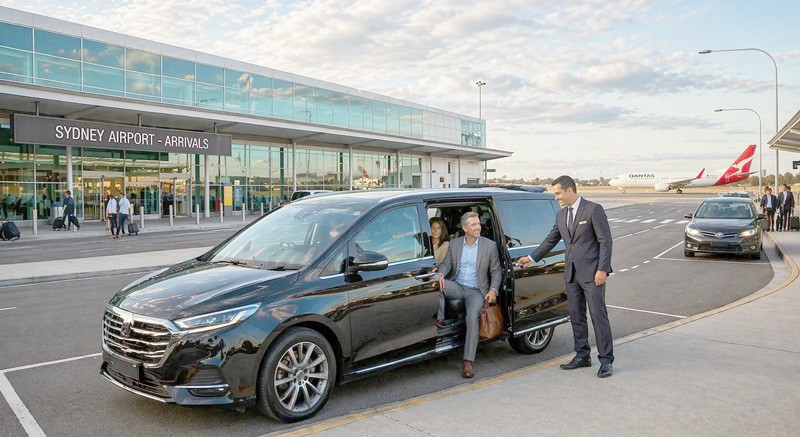
The process combines several connected tasks: advance booking, flight monitoring, terminal meeting instructions, passenger identification, luggage assistance, guidance to the vehicle, and private transport to the destination. Each part reduces uncertainty at a different stage of the airport pickup.
For Book Car Sydney, the value of meet and greet therefore goes beyond a chauffeur holding a name sign. The service works properly when the booking information, flight status, passenger communication, chauffeur coordination, and vehicle arrangement all remain connected from before arrival until the passenger leaves the airport.
How Book Car Sydney meet and greet works at Sydney Airport
The service follows a planned sequence from booking through to the final transfer. Understanding that sequence makes it clear what information passengers need to provide and what happens after the aircraft lands.
1. Provide the arrival and transfer details when booking
Meet and greet should be arranged before the passenger arrives at Sydney Airport.
The booking should contain the information needed to coordinate the flight, identify the passenger, and prepare the appropriate vehicle. This normally includes:
-
Passenger name
-
Flight number
-
Travel date
-
Scheduled arrival time
-
Number of passengers
-
Destination
-
Number and approximate size of bags
-
Relevant special luggage or travel requirements
The flight number is especially important because an airport transfer cannot be coordinated reliably from the scheduled arrival time alone. Flights may arrive early, run late, or have their timing changed.
Passenger and luggage information also has an operational purpose. A booking for one traveler with a suitcase does not create the same vehicle requirement as a family, a larger group, or passengers traveling with multiple large bags.
Providing accurate information before travel helps Book Car Sydney prepare the pickup rather than discovering a capacity or coordination problem after the passenger has already landed.
2. The arriving flight is monitored
Once the transfer has been booked, the flight information becomes the main timing reference for the airport collection.
Flight tracking allows the chauffeur to work from the actual progress of the flight rather than relying only on the original timetable.
If the aircraft is delayed, the pickup can be coordinated around the updated flight arrival. If it arrives earlier than expected, the new flight status provides the chauffeur with that information as well.
This is an important distinction between flight monitoring and simply scheduling a vehicle for a fixed clock time.
However, flight tracking only explains what is happening to the aircraft. It cannot show exactly how long an individual passenger will take after landing.
International passengers, for example, may still need to complete immigration, baggage collection, customs, and quarantine procedures. A delayed suitcase or a longer-than-usual border process can therefore hold up a passenger even though the aircraft has already arrived.
For that reason, flight tracking and passenger communication perform different but complementary roles in a meet and greet transfer.
3. Complete the normal airport arrival process
After leaving the aircraft, passengers complete the normal arrival procedures that apply to their flight.
For an international arrival, the passenger generally needs to complete the applicable passport-control, baggage, customs, and biosecurity processes before entering the public arrivals area.
Domestic passengers normally proceed through the terminal and collect any checked baggage before going to the agreed meeting location.
Meet and greet does not replace these airport procedures. It coordinates the ground-transfer handoff once the passenger reaches the appropriate public meeting area.
4. Go to the confirmed terminal meeting point
Sydney Airport has different terminals, so “meet me at Sydney Airport” is not a sufficiently precise pickup instruction.
T1 serves international passengers, while domestic services operate through T2 and T3. The passenger should therefore follow the meeting instructions supplied for the relevant flight rather than assuming every Book Car Sydney collection takes place at the same location.
Sydney Airport itself provides designated public meeting points at:
-
T1 International arrivals level between exits A and B
-
T2 Domestic arrivals level opposite baggage carousel 6
These airport meeting points can help passengers orient themselves, but the exact Book Car Sydney collection location should always be taken from the booking or pickup instructions supplied for that transfer.
T3 and other collection arrangements may require different instructions, so the passenger should not move to another terminal or pickup zone based only on a previous airport transfer.
5. Identify the chauffeur by the name sign
The chauffeur waits at the arranged meeting location with passenger identification, typically a name sign.
This gives the arriving traveler a simple visual reference in a busy terminal.
Instead of trying to identify a particular vehicle outside or repeatedly calling different drivers, the passenger looks for the agreed name at the confirmed location.
This is particularly useful for:
-
International visitors unfamiliar with Sydney Airport
-
First-time visitors to Sydney
-
Corporate guests whose transport was booked by another person
-
Travelers without immediate local mobile connectivity
-
Families or passengers managing several bags
The name sign is therefore not merely a premium-service detail. It is part of the passenger-identification process that connects the traveler with the correct chauffeur.
6. Confirm the passenger and booking
Once passenger and chauffeur meet, the booking can be confirmed before proceeding to the vehicle.
This is the point where the chauffeur knows the correct passenger has been collected and the passenger knows they have found the transport arranged for their journey.
A professional airport chauffeur should make this transition clear and straightforward: greet the passenger, confirm the booking where necessary, provide appropriate assistance, and guide the passenger toward the vehicle without adding unnecessary complexity after a flight.
7. Receive assistance with luggage
Luggage assistance is one of the practical differences between meet and greet and a pickup where the passenger independently walks to a vehicle collection area.
After meeting the passenger, the chauffeur can assist with standard luggage and help move it from the terminal meeting location toward the vehicle.
This is especially useful when travelers have several bags, are traveling with children, or have just completed a long international journey.
Passengers should still declare large, unusual, or numerous items before the trip.
Oversized suitcases, sporting equipment, mobility equipment, child-related equipment, or a large number of bags can affect vehicle suitability. The best time to solve that requirement is during booking, not after the chauffeur has arrived with a vehicle that was assigned using incomplete information.
8. The chauffeur guides the passenger to the vehicle
Meeting inside or around the arrivals area does not necessarily mean the vehicle can wait directly beside the terminal door.
Sydney Airport uses designated parking, pickup, traffic, and vehicle-access arrangements. These arrangements differ from simply stopping anywhere outside the terminal.
After connecting with the passenger, the chauffeur handles the transition from the meeting location to the waiting vehicle.
This means the traveler does not need to determine independently which car park, access point, or vehicle area applies to the booked transfer while simultaneously managing luggage.
9. Travel directly to the booked destination
Once the passengers and luggage are in the vehicle, the meet and greet stage becomes the private transfer.
The chauffeur transports the booking party to the destination provided in advance.
Unlike a shared transfer, passengers do not need to wait for unrelated travelers to be collected before beginning their onward journey.
The airport arrival and the ground transport therefore operate as one continuous process:
Flight arrival → terminal meeting → passenger identification → luggage assistance → vehicle → destination
What makes a meet and greet pickup different from a basic airport collection?
A basic airport pickup and a meet and greet service may ultimately transport a passenger to the same destination, but the way the passenger connects with the vehicle is different.
With a standard pickup, the traveler may need to:
-
Leave the terminal
-
Find the correct pickup zone
-
Identify the correct vehicle
-
Call or message the driver
-
Move luggage to the collection area independently
With meet and greet, more of that coordination is arranged before the passenger begins looking for the vehicle.
The chauffeur and passenger connect at a predefined location, passenger identification is visible, and the chauffeur then assists with the transition toward the vehicle.
| Meet and greet | Standard airport pickup |
|---|---|
| Transfer arranged before arrival | Pickup may require more passenger coordination |
| Flight details support arrival timing | Collection may rely more heavily on a scheduled pickup time |
| Chauffeur meets passenger at an arranged location | Passenger normally proceeds toward the vehicle pickup area |
| Name sign helps identify the chauffeur | Identification may depend on calls, messages, registration details, or an app |
| Luggage assistance can begin after meeting | Passenger may carry luggage to the pickup point independently |
| Chauffeur guides passenger to the vehicle | Passenger generally locates the relevant collection area |
| Private transfer continues to the destination | Transport begins after the passenger locates the vehicle |
The biggest difference is therefore not the car itself. It is the amount of coordination completed before the passenger reaches the vehicle.
Why flight tracking and communication both matter
Flight tracking is a core part of a coordinated airport pickup, but it cannot solve every delay.
When the aircraft is delayed
If the flight is running late, updated flight information allows the pickup timing to be adjusted around the actual arrival rather than the original timetable.
Passengers generally do not need to treat a normal airline delay in the same way as an unexplained personal delay after landing, provided the correct flight information was supplied with the booking.
When the passenger is delayed after landing
The situation changes once the flight has landed.
A passenger might be delayed by:
-
Immigration queues
-
Customs or biosecurity processing
-
Delayed baggage
-
Lost baggage enquiries
-
Mobility requirements
-
Difficulty finding the meeting location
The flight-tracking system cannot determine which of these situations applies.
If the passenger expects an unusual delay after landing, direct communication becomes important.
When the flight details change
If the airline changes information that materially affects the transfer, the updated details should be provided to Book Car Sydney.
Relevant changes can include:
-
Flight number
-
Arrival date
-
Arrival terminal
-
Replacement flight
-
Major itinerary change
The chauffeur can only coordinate the transfer accurately when the booking record reflects the journey the passenger is actually taking.
What should you do if you cannot find your chauffeur?
Not immediately seeing the chauffeur does not mean the passenger should begin moving between different pickup areas.
A simple sequence helps prevent the passenger and chauffeur from searching for each other in different locations.
Stay at the confirmed meeting location
First, check the original pickup instruction and remain at the stated meeting point unless Book Car Sydney or the chauffeur tells you otherwise.
Walking to another terminal exit, car park, taxi rank, or rideshare zone can turn a small meeting delay into a larger coordination problem.
Check the name sign carefully
In a busy arrivals area, several chauffeurs may be holding passenger signs.
Check the passenger name or booking identification rather than assuming the first chauffeur in the area belongs to the booking.
Check that you are at the correct terminal
Verify the terminal and meeting location against the booking instructions.
Sydney Airport's international and domestic terminals are separate, so an incorrect terminal assumption can prevent passenger and chauffeur from finding each other.
Use the supplied contact information
If the chauffeur is still not visible, use the contact details supplied with the booking.
A call or message can establish:
-
Whether the chauffeur is already at the meeting point
-
Whether the passenger has reached the correct location
-
Whether an airport access or parking issue has changed the immediate meeting arrangement
-
What the passenger should do next
The safest approach is to coordinate before moving elsewhere.
Why accurate luggage information affects the pickup
Luggage information is not just a convenience note. It influences the practical suitability of the vehicle assigned to the transfer.
A vehicle must accommodate both passengers and their luggage safely.
For example, the same passenger count can produce very different requirements if one booking includes only cabin bags while another includes multiple large suitcases.
Before traveling, passengers should therefore disclose:
-
Number of checked bags
-
Large or oversized luggage
-
Sporting equipment
-
Bulky items
-
Mobility equipment
-
Child-related equipment requiring additional space
Accurate information allows the transport provider to consider the complete load rather than allocating a vehicle from passenger count alone.
This is one area where advance booking provides a practical advantage: vehicle requirements can be resolved before the traveler reaches the airport.

The role of the professional chauffeur
The chauffeur performs more than the driving stage of a meet and greet transfer.
The passenger experience begins when the chauffeur prepares for the airport collection and continues until the traveler reaches the vehicle.
A professionally handled meet and greet therefore involves:
-
Arriving prepared for the confirmed flight
-
Following the agreed meeting arrangement
-
Presenting clear passenger identification
-
Greeting the passenger courteously
-
Confirming the correct booking where necessary
-
Assisting appropriately with luggage
-
Giving clear guidance toward the vehicle
-
Communicating calmly when an arrival does not proceed as expected
These behaviors matter because the chauffeur is the human link between the booking system and the arriving passenger.
Flight tracking can show that an aircraft has landed, and a booking system can hold the passenger information, but the chauffeur must still turn those details into a smooth physical pickup.
How operational coordination improves reliability
A dependable meet and greet pickup is created by several systems working together rather than by one feature.
The sequence can be understood as four connected layers.
Booking information
Passenger, flight, luggage, destination, and timing information establish what needs to happen.
Flight monitoring
Flight status helps align chauffeur timing with the aircraft's actual progress.
Driver and passenger coordination
Meeting instructions, visible identification, and contact details enable the two parties to connect after the passenger reaches arrivals.
Airport pickup execution
The chauffeur assists with luggage, guides the passenger to the appropriate vehicle location, and begins the private transfer.
A problem in one layer can affect the others.
An incorrect flight number can disrupt timing. Incomplete luggage information can affect vehicle suitability. An unclear meeting location can leave a passenger and chauffeur close to each other but unable to connect.
Reliability therefore depends as much on accurate preparation and communication as it does on the vehicle arriving at the airport.
What passengers should confirm before traveling
A final check before the flight reduces avoidable pickup problems.
Confirm that the booking contains the correct:
-
Passenger name
-
Mobile contact details
-
Flight number
-
Arrival date
-
Arrival terminal where known
-
Passenger count
-
Destination
-
Luggage information
-
Relevant special requirements
Passengers should also keep the booking confirmation and meeting instructions accessible after landing.
Do not rely entirely on remembering the instructions or accessing an email through airport Wi-Fi after arrival. Keeping the relevant information available on the phone before the flight makes it easier to check the meeting point and contact details immediately.
If another person, hotel, travel coordinator, or business arranged the transfer, make sure the passenger who is actually traveling also receives the pickup instructions.
What to check about waiting time and airport charges
Waiting-time rules can affect an airport transfer because an aircraft's landing time and the passenger's appearance in the arrivals area are not the same event.
International processing, baggage delays, and other post-flight procedures may add significant time after touchdown.
Passengers should therefore check the Book Car Sydney booking confirmation or applicable service terms for the specific waiting arrangement attached to their transfer, including:
-
When complimentary or included waiting time begins
-
How much waiting time is included
-
What happens after the included period expires
-
Whether the policy differs for international and domestic arrivals
-
How unusually long immigration or baggage delays should be communicated
The same approach should be used for airport access, parking, tolls, or other charges.
Rather than assuming that every chauffeur service structures its fare in the same way, passengers should use the confirmed Book Car Sydney quote or booking terms to determine exactly which charges are included.
This avoids applying another provider's waiting or pricing policy to a Book Car Sydney reservation.
When Sydney Airport meet and greet is particularly useful
Meet and greet can be used for many airport transfers, but its practical value is greatest when reducing uncertainty at the terminal is important.
International arrivals
International passengers may have completed a long flight followed by immigration, baggage collection, customs, and biosecurity processing.
Having a predefined meeting arrangement provides a clear next step once those procedures are complete.
First-time visitors to Sydney
Passengers unfamiliar with Sydney Airport do not need to learn the vehicle pickup system immediately after landing.
They follow the booking instructions, meet the chauffeur, and are guided from arrivals to the vehicle.
Business and corporate travelers
A company may arrange transport for an employee, executive, customer, or visiting partner.
Visible passenger identification and a pre-arranged chauffeur create a more structured handover than asking the traveler to arrange ground transport after arrival.
Families and passengers with several bags
Families may simultaneously manage children, strollers, suitcases, and personal belongings.
Connecting with the chauffeur before making the journey to the vehicle reduces the number of tasks they need to handle independently.
Late-night and early-morning arrivals
A pre-booked transfer establishes the ground-transport arrangement before the flight takes place.
The passenger therefore does not need to begin searching for a suitable transport option only after arriving at an inconvenient hour.
Meet and greet does not replace airport concierge or fast-track services
A chauffeur meet and greet transfer should not be confused with every service marketed using the words “meet and greet.”
Book Car Sydney's airport transfer is focused on the connection between the arriving passenger and private ground transport.
The chauffeur meets the passenger at the agreed accessible location, assists with the transfer to the vehicle, and drives the passenger to the booked destination.
Separate airport concierge services may offer different functions such as assistance with check-in, security, immigration, lounge access, or other airport processes.
Those services involve a different scope.
Passengers should therefore distinguish between:
Airport transfer meet and greet: coordinating the passenger's connection with a chauffeur and private vehicle
and
Airport concierge or fast-track assistance: providing assistance with airport processing or services inside controlled areas of the airport
Knowing this distinction helps passengers book the type of service they actually need.
Book Car Sydney’s Sydney Airport meet and greet service is designed to make the transition from aircraft arrival to private ground transport more predictable.
The passenger books in advance and supplies the flight, passenger, luggage, and destination details. The arriving flight can then be monitored, the chauffeur prepares for the relevant terminal meeting arrangement, and the passenger looks for the agreed identification after completing the normal airport arrival procedures.
From there, the chauffeur assists with luggage, guides the passenger to the vehicle, and continues directly to the booked destination.
The strongest meet and greet experience depends on coordination rather than any single premium feature. Accurate booking information, flight monitoring, clear terminal instructions, visible passenger identification, appropriate vehicle planning, luggage assistance, and direct communication when delays occur all contribute to the same objective: making the airport pickup easier to understand and easier to complete.
Latest Insights
- Is There a Free Bus from Sydney Domestic to International?
- Can You Walk from Domestic to International at Sydney Airport?
- How Far Apart Are Sydney Airport’s International and Domestic Terminals?
- How Long Does a Domestic to International Transfer Take at Sydney Airport?
- Is There a Free Shuttle at Sydney Airport?
- Airport Transfer With Luggage
