


Transfer Booking Checklist
- What should you check before booking airport transfer Sydney?
- What flight information is required for airport transfer Sydney?
- How to verify airport transfer service details Sydney?
- How to check airport transfer pricing Sydney before booking?
- What timing factors affect airport transfer booking Sydney?
- What special cases to prepare for airport transfer Sydney?

What should you check before booking airport transfer Sydney?
Pickup location accuracy
Accurate pickup location is the first and most critical detail in any airport transfer booking. You should clearly specify whether the pickup is from a residential address, hotel, office building, or a specific landmark. In large cities like Sydney, even small mistakes such as missing unit numbers, incorrect street names, or unclear entrances can lead to delays or missed pickups. If the location is complex (e.g., apartment complexes or business centers), include additional instructions such as gate codes, lobby names, or nearest access points to ensure the driver can locate you بسهولة.
Drop off location details
The drop-off location must be precise, especially when heading to the airport. Sydney Airport has multiple terminals, and entering the wrong one can cause unnecessary stress and time loss. Always confirm whether your flight departs from domestic or international terminals and provide the exact terminal name. If your destination is not the airport (e.g., hotel or event venue), include specific drop-off instructions like entrance gates or reception areas to ensure a smooth arrival.
Passenger information requirements
Providing accurate passenger details helps the transfer provider allocate the right vehicle and service level. This typically includes the number of passengers, names (for meet and greet services), and any specific needs. For example, if someone in the group requires assistance or has mobility issues, this should be clearly stated. Incorrect passenger information may result in insufficient seating capacity or service mismatches.
Luggage capacity planning
Luggage planning is often underestimated but plays a crucial role in airport transfers. You should specify not only the number of suitcases but also their size (carry-on, medium, large). Oversized luggage, sports equipment, or extra bags require larger vehicles such as vans or SUVs. Failure to provide accurate luggage details can lead to space issues, delays, or additional charges if the driver needs to upgrade the vehicle at the last minute.
Special service request options
Many airport transfer services offer additional options to enhance convenience and comfort. These include child seats, wheelchair accessibility, meet and greet services, or VIP chauffeur options. If you require any of these, you should request them during booking rather than at the last minute. This ensures availability and allows the provider to prepare accordingly, avoiding service disruptions.
What flight information is required for airport transfer Sydney?
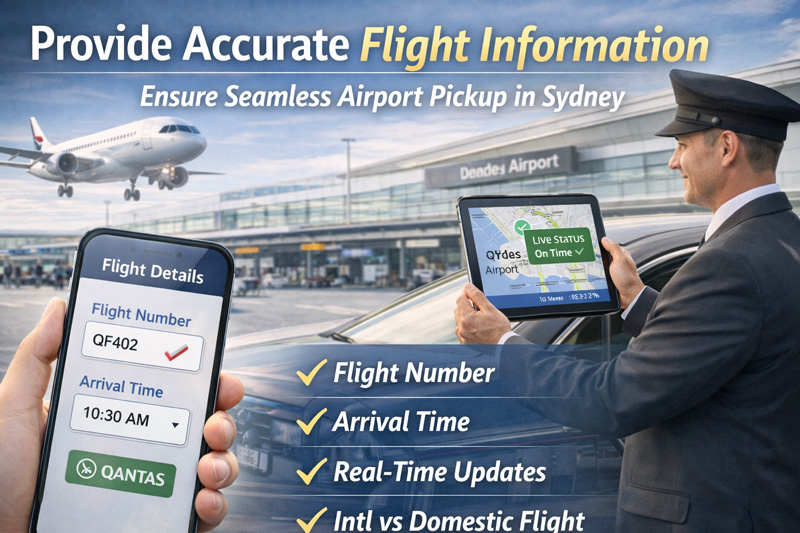
Flight number input
The flight number is a key piece of information that allows the transfer provider to track your flight status accurately. It enables the system or driver to monitor delays, early arrivals, or gate changes. Without the correct flight number, the service cannot synchronize pickup timing with your actual arrival, increasing the risk of miscommunication.
Flight arrival time coordination
Providing the scheduled arrival time helps the driver plan the pickup, but it should always be aligned with real-time updates. Airport transfer services use this information to estimate when you will exit the terminal, taking into account taxiing, disembarkation, and baggage collection. Accurate coordination ensures that the driver arrives neither too early nor too late.
Real time flight tracking system
Professional airport transfer providers often use real-time flight tracking systems. These systems automatically update flight status and adjust pickup times accordingly. This reduces the need for manual communication and ensures a seamless experience even if your flight is delayed or arrives earlier than expected. Choosing a provider with this feature significantly improves reliability.
Domestic vs international flight differences
Domestic and international flights have different processing times, which directly impact pickup scheduling. International arrivals typically require more time due to immigration, customs clearance, and baggage handling, while domestic flights are faster. When booking, clearly indicate your flight type so the provider can allocate appropriate waiting time and avoid premature driver arrival.
Buffer time after landing
Buffer time refers to the additional time allocated after your flight lands before the pickup occurs. This accounts for real-world delays such as waiting for baggage, clearing customs, or navigating the airport. A well-calculated buffer time ensures that you are not rushed and that the driver does not leave prematurely. For international flights, this buffer is usually longer compared to domestic arrivals.
How to verify airport transfer service details Sydney?
Service type selection
Before confirming your booking, you need to clearly identify the type of airport transfer service that matches your travel needs. Options typically include private transfer, shared shuttle, or chauffeur service. A private transfer offers direct, non-stop travel, while a shuttle may involve multiple stops. Chauffeur services focus on comfort and premium experience. Selecting the wrong service type can impact travel time, privacy, and overall satisfaction, so always align the service with your purpose—whether it is business, family travel, or leisure.
Vehicle type suitability
Vehicle selection should be based on both passenger count and luggage requirements. Sedans are suitable for individuals or couples with minimal luggage, while SUVs and vans are better for families or groups. You should also consider comfort level, especially for long-distance transfers. Choosing an unsuitable vehicle can lead to cramped conditions or even inability to accommodate all passengers and luggage.
Driver contact availability
Reliable airport transfer services provide driver contact details before pickup. This allows you to communicate directly in case of delays, location confusion, or last-minute changes. Ensure that the contact method (phone, messaging app, or in-app chat) is accessible and responsive. Lack of driver communication is a common cause of missed connections and unnecessary stress.
Pickup instructions clarity
Clear pickup instructions are essential, particularly at busy locations like Sydney Airport. You should verify whether the service includes meet and greet inside the terminal or curbside pickup. Details such as meeting point, signage (e.g., name board), and waiting area should be clearly outlined in advance. Ambiguous instructions can result in wasted time searching for the driver or miscoordination.
Booking confirmation details
After completing the booking, always review the confirmation details carefully. This includes pickup time, locations, passenger information, vehicle type, and any special requests. A professional provider will send a confirmation email or message with all relevant details. Any errors should be corrected immediately to avoid service disruption on the day of travel.
How to check airport transfer pricing Sydney before booking?
Fixed price vs variable pricing
Airport transfer pricing generally falls into two categories: fixed price and variable (metered) pricing. Fixed pricing provides a guaranteed rate regardless of traffic conditions, offering predictability and peace of mind. Variable pricing, on the other hand, may fluctuate based on distance, time, and traffic. Understanding the pricing model helps you avoid unexpected costs and choose the option that best suits your budget.
Additional fees and surcharges
You should always check for any additional fees that may not be included in the base price. These can include late-night surcharges, waiting time fees, airport pickup fees, or extra charges for oversized luggage. Transparent pricing is a key indicator of a reliable service provider, so make sure all potential costs are clearly disclosed before booking.
Toll and parking fee inclusion
In Sydney, toll roads and airport parking fees can significantly affect the total transfer cost. Some providers include these fees in the quoted price, while others add them separately. Confirming whether tolls and parking are included helps you accurately estimate the total cost and avoid surprises after the trip.
Cancellation and refund policy
Unexpected changes in travel plans are common, so it is important to understand the cancellation and refund policy. Check how much notice is required for free cancellation and whether partial refunds are available. Flexible policies provide greater security, especially for flights that may be delayed or rescheduled.
Payment method options
Different providers offer various payment options, including online payment, credit card, digital wallets, or cash to the driver. You should choose a method that is convenient and secure. Additionally, confirm whether payment is required upfront or after the trip. Clear payment terms help prevent confusion and ensure a smooth transaction process.
What timing factors affect airport transfer booking Sydney?
Pickup time calculation
Accurate pickup time calculation is essential to ensure a smooth airport transfer. For departures, you should work backward from your flight time, considering check-in requirements, travel duration, and potential delays. For arrivals, pickup time should align with your actual landing time plus additional time for disembarkation and baggage collection. Miscalculating pickup time can lead to unnecessary waiting or missed transfers.
Airport drop off timing rules
Each airport has recommended drop-off timing guidelines that travelers should follow. Typically, passengers are advised to arrive at the airport 2–3 hours before international flights and 1–2 hours before domestic flights. These rules are critical when scheduling your transfer, as arriving too late increases the risk of missing your flight, while arriving too early may result in unnecessary waiting time at the terminal.
Peak hour traffic conditions
Traffic conditions in Sydney can vary significantly depending on the time of day. Morning and evening peak hours often involve heavy congestion, especially on major routes leading to the airport. You should factor in potential delays caused by traffic when planning your transfer time. Reliable providers often adjust pickup times based on traffic patterns, but it is still important for passengers to be aware of these conditions.
Airport security waiting time
Security screening and check-in queues can take longer during busy travel periods. Factors such as holidays, weekends, and peak travel seasons can increase waiting times at the airport. When booking your transfer, it is important to include extra time to account for these procedures, ensuring a stress-free departure experience.
Terminal specific timing
Different terminals at Sydney Airport may have varying processing times and access routes. International terminals typically require longer processing due to immigration and customs procedures, while domestic terminals are generally faster. Additionally, distances between terminals and entry points can affect how early you need to arrive. Understanding terminal-specific timing helps optimize your transfer schedule.
What special cases to prepare for airport transfer Sydney?
Child seat requirement
If you are traveling with young children, requesting an appropriate child seat is essential for safety and legal compliance. Not all transfer services provide child seats by default, so this must be specified during booking. Different age groups require different seat types, such as infant seats or booster seats, and availability may be limited without prior notice.
Wheelchair accessibility
Passengers with mobility challenges should ensure that the chosen transfer service offers wheelchair-accessible vehicles. This includes vehicles with ramps or lifts, as well as drivers trained to assist passengers safely. Providing this information in advance allows the provider to arrange suitable transportation and avoid inconvenience at the time of pickup.
Large luggage handling
Travelers with oversized or special luggage—such as sports equipment, musical instruments, or multiple large suitcases—need to inform the provider beforehand. Standard vehicles may not accommodate such items, requiring larger vans or customized solutions. Proper planning ensures that all luggage can be transported safely without delays or additional charges.
VIP service request
For those seeking a premium travel experience, VIP or chauffeur services offer enhanced comfort, privacy, and professionalism. These services may include luxury vehicles, professional drivers, and personalized pickup arrangements. If you require a higher level of service, it is important to request it during booking to ensure availability and proper preparation.
Last minute booking handling
Last-minute bookings can be challenging due to limited vehicle availability and time constraints. While many providers accept urgent requests, service quality and vehicle options may be restricted. To minimize risks, ensure that all booking details are accurate and confirm availability immediately. Choosing a provider with strong operational capacity can improve the chances of securing a reliable transfer even at short notice.
Conclusion
Booking an airport transfer in Sydney is not just about choosing a vehicle—it is about ensuring every detail is aligned for a seamless travel experience. From accurate location input and flight coordination to pricing transparency and timing strategy, each step plays a critical role in avoiding delays, extra costs, and unnecessary stress.
By following this transfer booking checklist, you can confidently select a reliable service, match it to your travel needs, and stay fully prepared for both standard and special situations. Whether you are traveling for business, with family, or under tight schedules, a well-prepared booking process is the key to a smooth airport transfer from start to finish.
Latest Insights
- Is There a Free Bus from Sydney Domestic to International?
- Can You Walk from Domestic to International at Sydney Airport?
- How Far Apart Are Sydney Airport’s International and Domestic Terminals?
- How Long Does a Domestic to International Transfer Take at Sydney Airport?
- Is There a Free Shuttle at Sydney Airport?
- Airport Transfer With Luggage
