


Which Airlines Fly into Sydney Airport and Where Do They Arrive?
- Which Sydney Airport terminal does each airline use?
- Which international airlines arrive at Terminal 1?
- Which domestic airlines arrive at T2 and T3?
- Why can one airline use different Sydney Airport terminals?
- How to confirm the arrivals terminal for a particular flight
- Where should you meet passengers arriving in Sydney?
- What if your next flight uses a different terminal?
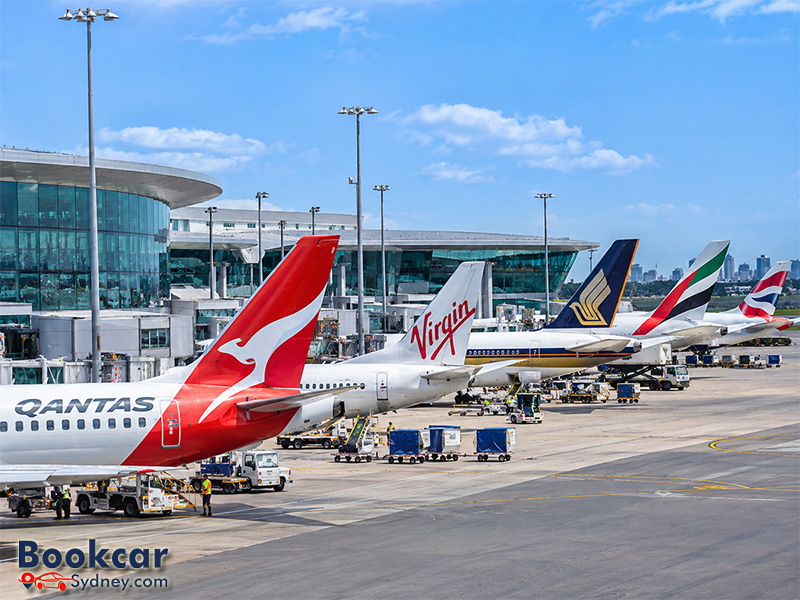
Which Sydney Airport terminal does each airline use?
International passenger flights arrive at Terminal 1 (T1). Domestic flights use Terminal 2 (T2) or Terminal 3 (T3), with the terminal determined by the operating airline. The table below summarizes arrivals, not necessarily where every airline checks in for departures.
|
Flight type |
Airline or service |
Arrival terminal |
|
International |
International flights operated by Qantas, Jetstar, Virgin Australia and overseas airlines |
T1 International |
|
Domestic |
Qantas domestic services |
T3 Domestic |
|
Domestic |
Jetstar domestic services |
T2 Domestic |
|
Domestic |
Virgin Australia domestic services |
T2 Domestic |
|
Regional domestic |
Rex |
T2 Domestic |
|
Regional domestic |
FlyPelican |
T2 Domestic |
For airlines that fly both domestic and international routes, the airline name alone is not enough to identify the terminal. Check the specific flight and its route.
Which international airlines arrive at Terminal 1?
All international passenger flights arriving at Sydney Airport use T1. This includes overseas carriers as well as international services operated by Australian airlines.
Examples of airlines listed for international operations at Sydney Airport include:
|
Region |
Examples of international airlines |
|
Americas |
Air Canada, American Airlines, Delta Air Lines, LATAM, United Airlines |
|
Asia |
Air China, Cathay Pacific, China Eastern Airlines, China Southern Airlines, Japan Airlines, Korean Air, Singapore Airlines, Vietnam Airlines, Vietjet |
|
Europe and Middle East |
British Airways, Emirates, Etihad Airways, Qatar Airways, Turkish Airlines |
|
New Zealand and Pacific |
Air New Zealand, Air Niugini, Aircalin, Fiji Airways |
|
Australian airlines on international routes |
Qantas, Jetstar, Virgin Australia |
These are examples rather than a complete list of flights operating on any particular date. Some airlines have seasonal services, vary their schedules, or market flights operated by a partner. Use the operating flight number to confirm the actual arrival.
Which domestic airlines arrive at T2 and T3?
Terminal 2: Jetstar, Virgin Australia, Rex and FlyPelican
Jetstar and Virgin Australia domestic flights arrive at T2. Rex and FlyPelican domestic arrivals also use T2. Passengers meeting someone arriving on these services should therefore plan around the T2 arrivals area, subject to a final check of the flight information.
Terminal 3: Qantas domestic flights
Qantas domestic services arrive at T3. This is distinct from international Qantas flights, which arrive at T1. For regional services associated with Qantas or QantasLink, use the terminal shown for the individual flight rather than assuming that a brand or flight code guarantees a terminal.
Important change from November 4, 2026
Sydney Airport has announced that all Rex and FlyPelican flights will both arrive at and depart from T2 starting November 4, 2026. On November 3, their arrivals use T2 while their departures still use T3. This distinction matters when checking an outbound flight or arranging a return journey; it does not change the T2 arrival assignments shown above.
Why can one airline use different Sydney Airport terminals?
The difference is often between international and domestic services, not between airlines. For example, Qantas uses T1 for international arrivals and T3 for domestic arrivals. Jetstar uses T1 for international arrivals and T2 for domestic arrivals. Virgin Australia domestic flights use T2, while its international arrivals use T1.
A codeshare adds another possible source of confusion. Your ticket may display one airline’s flight number even when another airline operates the aircraft. When checking a terminal, prioritize the operating flight and its actual route. Do not use a partner airline’s name on the booking as the sole guide.
How to confirm the arrivals terminal for a particular flight
A terminal guide is useful for planning, but the flight listing is the better reference for a specific arrival. Follow these steps:
- Find the arrival flight number, travel date and origin city on the itinerary or booking confirmation.
- Check which airline operates the flight, especially if the ticket shows multiple flight numbers or mentions a codeshare.
- Look up the flight on the Sydney Airport flight information and confirm whether the listed terminal is T1, T2 or T3.
- Recheck the flight status on the day of travel and use the airport’s information screens if the traveler is already in the terminal.
You can also consult the Sydney Airport airline directory to identify carriers, but a carrier listing does not substitute for the arrival details of a particular flight. Terminal information and flight status can change.
Where should you meet passengers arriving in Sydney?
If the flight is international, arrange to meet at the public arrivals area of T1 after the traveler has completed the required arrival procedures and collected any checked baggage. If the flight is domestic, use the arrivals area at T2 or T3 as shown in the flight information.
Drivers should distinguish the terminal from the pickup zone: finding T2, for example, does not mean that every vehicle or rideshare service collects passengers directly outside the same door. Follow the signs for the relevant passenger pickup arrangement and agree on a specific meeting point once the traveler is ready.
What if your next flight uses a different terminal?
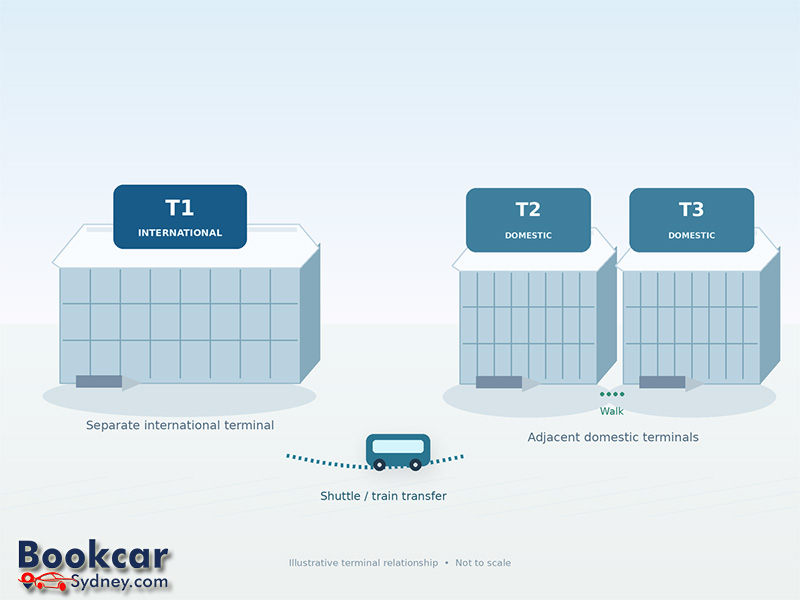
T1 International is separate from the domestic terminal precinct. You cannot walk between T1 and T2/T3. Sydney Airport offers a complimentary terminal transfer bus as well as train and road transport options. Shuttle operating hours and connection arrangements should be checked before travel.
T2 and T3 are closer together, and passengers can walk between them via the pedestrian route through the P1 parking area. If a trip includes a connection, allow for time to retrieve or recheck baggage where necessary, change terminals, and complete any applicable check-in, immigration or security steps. The airline can confirm which transfer arrangements apply to a particular booking.
Latest Insights
- Where Is Sydney Domestic Airport and Which Terminals Does It Have?
- Sydney Airport Terminal 3: Domestic Flights and Facilities
- Sydney Airport Terminal 2: Domestic Flights and Facilities
- Sydney Airport Terminal 1: International Flights and Facilities
- Sydney Airport vs Western Sydney Airport: What's the Difference?
- Which Airports Are Near Sydney, Australia?
