


Which Arrival Declaration Forms Are Required at Sydney Airport?
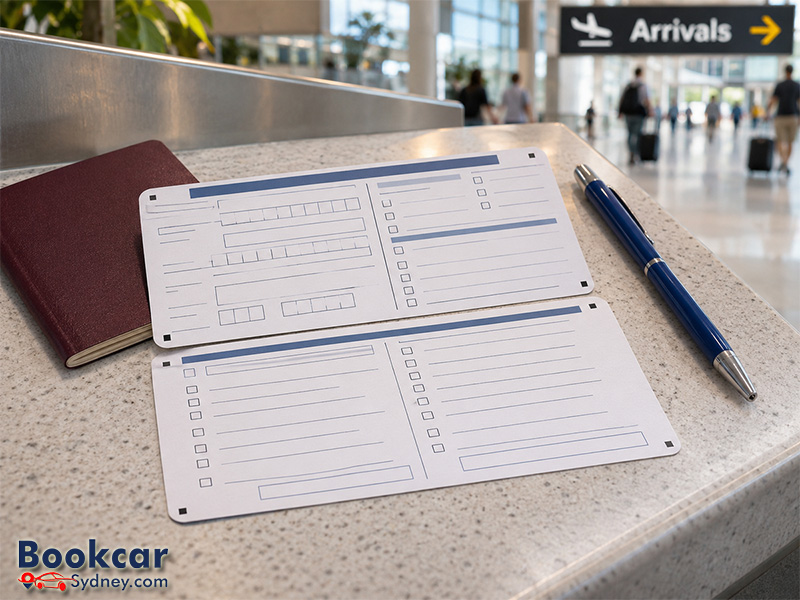
Which arrival declaration applies to your flight?
For a typical international arrival at Sydney Kingsford Smith Airport (SYD), the required arrival declaration is the paper Incoming Passenger Card. The card covers personal information as well as customs and biosecurity questions; there is no separate, routine biosecurity form for every passenger.
|
Arrival situation |
Declaration to prepare |
|
International flight arriving at Sydney Airport (SYD) |
Paper Incoming Passenger Card, unless you are eligible for and use the digital alternative |
|
Eligible Qantas flight to SYD with an invitation through the Qantas app |
Australia Travel Declaration through the Qantas app instead of the paper card |
|
International flight arriving at Western Sydney International Airport (WSI) |
Web-based Australia Travel Declaration is available; a paper card remains an option |
|
Domestic-only flight within Australia |
No international arrival passenger card for that domestic journey |
SYD and Western Sydney International (WSI) are different airports. The Australian Border Force web-based ATD form is specifically for WSI arrivals. Do not use that web form for a flight landing at SYD. The digital program is being rolled out progressively, so your airline and arrival airport determine whether you can use it.
What is the Incoming Passenger Card?
The IPC is a two-sided arrival card issued on board many international flights or supplied by Australian Border Force staff at the arrival terminal. Most people entering Australia must complete one, including returning Australian citizens. Limited legal exemptions exist.
You must complete the IPC in English, answer the relevant questions accurately, and sign and date it. Translated sample cards can help you understand the questions, but the card you submit must be completed in English.
Personal and travel details
The card asks for your name and passport number, flight details, intended Australian address, and other details such as your date of birth, occupation, nationality and contact information. It also asks about your residency intentions and, where applicable, health and character matters.
Customs and biosecurity questions
The front of the IPC includes yes-or-no questions about items in your baggage and matters that may need to be declared. These cover categories such as restricted goods, food and other biosecurity risks, some overseas purchases or commercial goods, and reportable currency. Read every question rather than assuming the answers are all “No”.
What must you declare when entering Australia?
The IPC or eligible ATD combines the usual passenger arrival declaration with questions used by customs and biosecurity officers. The correct answer depends on what you are carrying and the activities covered by the questions.
Food, plant and animal products
Declare goods covered by the biosecurity questions, including relevant food, ingredients, seeds, plants, wooden articles and animal products. Packaged or commercially prepared food is not automatically exempt. You should also declare clothing, footwear and equipment covered by the questions because they were used in rural areas or around animals.
If you are unsure whether an item needs to be declared, declare it and present it for assessment. A truthful declaration does not necessarily mean the item will be confiscated. Biosecurity officers decide whether inspection, treatment, export or disposal is required. You may also dispose of risk goods in the designated bins before biosecurity screening.
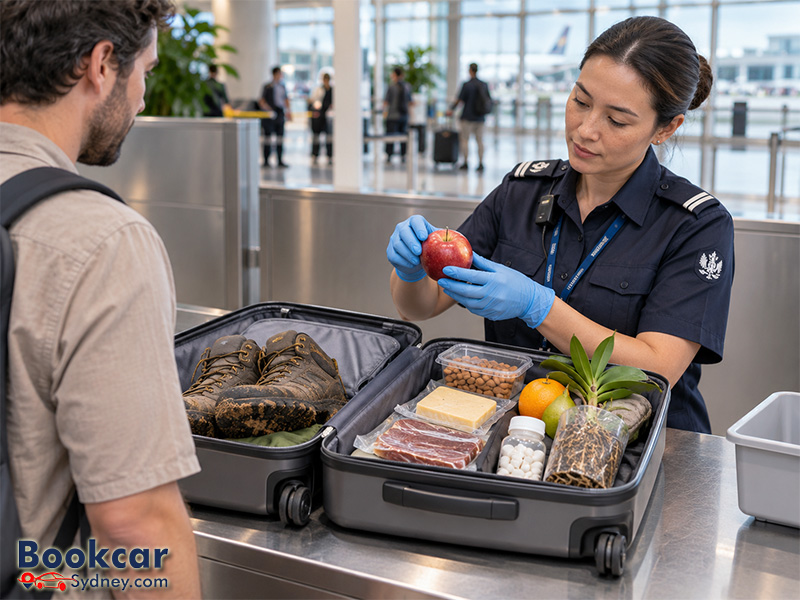
Restricted goods, purchases and commercial items
The card also asks about goods that may be prohibited or restricted, certain medicines, alcohol and tobacco above applicable limits, purchases above the relevant duty-free allowance, and goods or samples for business use. Check the current question wording and answer according to the goods you have with you; do not rely on an old screenshot or a remembered allowance.
Giving false or misleading answers can lead to penalties and, for some non-citizens, immigration consequences. Your baggage may be screened or inspected even if you have ticked “No” to every goods question.
When can you use the Australia Travel Declaration instead?
The Australia Travel Declaration is a digital alternative to the paper IPC, not a separate form everyone must complete in addition to it. It gathers arrival information and relevant customs and biosecurity declarations before you reach the border.
Selected Qantas arrivals at Sydney Airport
The Australian Border Force has made the ATD available through the Qantas app to eligible passengers on selected Qantas flights into Sydney, alongside other participating Australian airports. An invitation in the Qantas app is the practical indication that you can use it. Eligible passengers can submit the ATD up to 72 hours before travel. If you have not been invited, complete the paper IPC as normal.
Web-based declarations at Western Sydney International
Western Sydney International introduced a separate web-based ATD option for its international arrivals in October 2026. Passengers arriving there can submit the form online before their flight, while the paper IPC remains available. This service does not make the same web form valid for arrivals at Sydney Airport (SYD).
For a WSI arrival, use the official Australian Border Force Australia Travel Declaration web form. For a SYD arrival, follow the Qantas app invitation if one has been issued; otherwise use the IPC.
Is another form required if you carry A$10,000 or more?
Yes, a separate report applies if you carry reportable monetary instruments with a combined value of A$10,000 or more, including the foreign-currency equivalent. This may include cash and certain bearer negotiable instruments, such as traveller’s cheques or bearer cheques. There is no general prohibition on carrying that amount, but it must be reported.
You must submit a cross-border movement report to AUSTRAC before passing through customs. The IPC question about currency does not replace that separate reporting obligation. AUSTRAC provides an online form for people carrying money across the border; if you cannot access the online form, you can request a paper version from a border officer.
AUSTRAC online cross-border money declaration is the starting point for the reporting instructions and form.
How to complete your arrival declaration
- Check your airport code and airline. Confirm whether you are arriving at SYD or WSI and whether you have a valid invitation to use the ATD.
- Gather the details you need. Have your passport, flight number, intended Australian address and information about everything in your bags ready.
- Complete the applicable declaration. Answer both sides of the paper IPC in English and sign it, or submit the digital ATD using the eligible channel.
- Report special items separately if needed. Complete the AUSTRAC cross-border money report when the reporting threshold applies.
- Present the required information during arrival processing. Follow instructions for passport control, baggage collection, customs and biosecurity clearance, and show any goods you have declared.
A visa or Electronic Travel Authority (ETA), when required, concerns your permission to enter Australia. It is not a substitute for the arrival declaration. Likewise, using an automated passport gate does not remove your responsibility to make accurate customs and biosecurity declarations.
